Thursday, August 11, 2011

Great trip to Quito, Ecuador

This month I was surprised to learn that I actually held, what we call, a 'line' for the month of August. It's a set schedule that is paired with other flight attendants as well as a specific aircraft type. This month, I held a line that had three 31-hr layovers in Quito, and three 3-day trips to San Jose, Costa Rica, and San Juan, Puerto Rico.

On my last trip to Quito, I went out with two other flight attendants around the city. We agreed to meet down in the lobby of the hotel around 11am, and try to figure out what we were going to do. After talking with the concierge, he suggested that we hike up a volcano, after riding a Gondola, see the Equator, and if we had time, then an old volcano crater.

So, with his suggestion, we hopped in a taxi and off we went. First stop, the Teleferiqo Gondola ride. Quito's altitude starts off at 9,252 ft, almost twice as high as Denver, Colorado. Though because it sits only 25 kilometers from the Equator, Quito does not suffer through long winters like the Mile High City. On the contrary, Ecuador's capital enjoys mild days and cool nights almost year-round. The climate in the Andes varies according to the altitude and the time of the year. In Quito the temperature ranges from 55 F at night to 78 F.

With 13,287ft over the sea level the Teleferiqo Gondola is the highest in the world and for that reason you have to take care of high altitude sickness. Wind was pretty intense so thankfully I brought a light jacket to stay warm. Surprisingly, it was warm in the valley, but once we got to the start of the Pichincha Volcano hiking path, it was windy and cool.  The day was near picture perfect. I would have loved to have walked all the way to the volcano, however due to being so high up, our breathing became pretty labored and we had to take it easy.  Besides, our taxi driver said that he would wait for us and that we told him we would be roughly an hour. I must say, that hour went by extremely fast! I could have spent all day up here, but there were more things to go see.

So back to the Gondola and down we went. It was weird seeing a few mountain tops off in the distance with snow tops on them. Once back at the bottom, we found our taxi driver and off to the Equator we went. Apparently, about 400-600 years ago the city decided to erect a monument where they initially thought was the equator. However, with today's technology and the GPS, it was off by 787ft. So, with that, we went to the new area where the GPS shows accurate. We paid for a guide that showed us some heritage of the Amazon, and showed us some of the animals that are native to the land. A spider that is larger than my hand, boa constrictors, amazon worms, and the toothpick fish that actually is attracted to the ammonia from urine (so don't urinate in the amazon!)

After a fun time going through the museum and seeing a few hummingbirds fly around, our taxi driver asked if we wanted to see the where the largest volcanic eruption occurred in 1660 when more than 10 in of ash covered the city. Now, it's settled and farmers have started to farm over the area.

It was such a fun filled day, I truly can't wait to go back and see more of the old-town Quito. I hear there are more museums that talk about the rich history of the area!

Wednesday, August 10, 2011

DCI Open Class Championships

DCI Open Class Championships


The DCI World Championship Open Class Finals on Tuesday, Aug. 10, 2011, was the first time all Open Class corps performed together, since the Prelims show the day before was rained out after just two corps performed. Both shows were held at Ames Field in Michigan City, Ind.

Since there were no Prelims results, the top 12 corps in the Finals were declared Open Class Finalists. Also, Yokohama Scouts and Jubal were announced not by their placement amongst all corps in Finals, but as the 1st and 2nd place International Division corps. But for the sake of this recap analysis; those two corps will be discussed according to how they appear on the official contest recap. Although the two International Division corps scored in the top 12, the 13th place Forte and 14th place Colt Cadets were declared 11th and 12th Open Class finalists and all remaining Open Class corps finished two positions higher in Open Class than they appear on the contest recap.

In the caption awards, Best General Effect and Best Percussion was won by Blue Devils B, with Oregon Crusaders being awarded Best Brass and Best Visual Performance, and Spartans taking Best Color Guard.

Please note that when looking at the scoring recaps, the two General Effect captions, Visual and Music, are added to the final score without being divided in half. The six remaining judges in the three Visual captions (Performance, Ensemble and Color Guard) and the three Music captions (Brass, Ensemble and Percussion) had their scores divided in half before being added to the final score. This is so the judges could work with 20 points each and not 10, which allows them to deal with tenths and not hundredths. (The two decimal places result when the scores are divided in half.)
All Open Class corps now proceed to Indianapolis, where they will compete head-to-head with the World Class corps in the DCI World Championship World Class Prelims.

Blue Devils B (1st-95.00) took 1st in both Visual and Music Effect, Music Ensemble and Percussion, the combined Effect score 0.50 above Oregon Crusaders. Since the corps placed 4th in Visual Ensemble and Color Guard and 5th in Visual Performance, scoring 0.50 under OC for 4th in total Visual, (compared to OC’s 3rd place), the Effect gain and the Visual deficit were a wash. It therefore came down to the 0.30 gain in total Music, (where the corps was 2nd in Brass and 1st in the other two captions) to call the show by 0.30.

Oregon Crusaders (2nd-94.70) took 1st in Visual Performance and Brass, 3rd in Color Guard and Percussion and 2nd in every other caption. Despite being up in Brass by 0.20 to BDB, the corps was down in Music Ensemble by 0.30 and down in Percussion by 0.50, the 0.60 deficit in those combined Music captions accounting for the 0.30 total deficit to BDB once those caption scores were divided in half.

Vanguard Cadets (3rd-94.20) took 1st in Visual Ensemble, and despite talking 2nd in Visual Performance and Color Guard, won the Best Visual award. Percussion also took 2nd, while both Effect captions, Brass and Music Ensemble placed 3rd.

Spartans (4th-91.50) scored 19.2 in Color Guard, 0.70 above BDB. Visual Performance and Visual Ensemble both placed 3rd, with Visual Effect and Brass placing 4th. Music Effect was 5th, while Music Ensemble and Percussion took 6th.

Revolution (5th-89.25) was 4th in Music Effect, Visual Performance and Percussion, 5th in Visual Ensemble and Color Guard, 6th in Brass, 9th in Music Ensemble and 10th in Visual Effect.

Genesis (6th-86.85) was 4th in Music Ensemble, 5th in Brass, 6th in Music Effect and Visual Ensemble, 7th in Visual Effect, 8th in Visual Performance and Percussion and 11th in Color Guard.

7th Regiment (7th-86.15) was 6th in Visual Effect and Visual Performance, 7th in Visual Ensemble and Brass, 8th in Music Effect, Color Guard and Music Ensemble, and 10th in Percussion.

Yokohama Scouts (8th-85.35/1st-International Division) was 5th in Visual Effect, 6th in Color Guard, 7th in Visual Performance and Music Ensemble, 8th in Visual Ensemble, 10th in Music Effect and Brass and 11th in Percussion.

Music City (9th-84.80/8th in Open Class) took 5th in Music Ensemble, 7th in Music Effect and Color Guard, 8th in Brass, 9th in Percussion, 10th in Visual Performance and Visual Ensemble and 11th in Visual Effect.

Legends (10th-82.30/9th in Open Class) was 8th in Visual Effect, 9th in Music Effect, Visual Ensemble and Brass, 10th in Music Ensemble, 11th in Visual Performance, 13th in Percussion and 15th in Color Guard.

Raiders (11th-81.90/10th in Open Class) took 5th in Percussion and 9th in Visual Performance and Color Guard. Music Effect, Visual Ensemble and Brass placed 11th, Music Ensemble 13th and Visual Effect 14th.

Jubal (12th-80.20/2nd in International Division) was 10th in Color Guard, 11th in Music Ensemble, 12th in Visual Effect, Visual Performance, Brass and Percussion, 13th in Music Effect and 14th in Visual Ensemble.

Forte (13th-79.20/11th in Open Class) took 7th in Percussion, 12th in Visual Ensemble and Color Guard, 13th in Visual Effect, Visual Performance and Brass, and 14th in Music Effect and Music Ensemble.

Colt Cadets (14th-79.15/12th in Open Class) took 9th in Visual Effect, 12th in Music Effect and Music Ensemble, 13th in Visual Ensemble and Color Guard, and 14th in Visual Performance, Brass and Percussion.

Les Stentors (15th-72.10/13th in Open Class) was 14th in Color Guard, 16th in Music Effect and Percussion and 15th in all other captions.

Racine Scouts (16th-69.55/14th in Open Class) was 15th in Music Effect and Percussion, 17th in Music Ensemble and 16th in all other captions.

Blue Saints (17th-63.05/15th in Open Class) was 16th in Music Ensemble and 17th in all other captions.

Spirit of Newark (18th-56.60/16th in Open Class) was 18th in all captions.

Wednesday, August 3, 2011

Turning off electronic devices...why is it so hard to do?

Today on descent into Montego Bay, one of my Flight Attendants asked a passenger to turn off his iPad while we were preparing the flight for landing.

He just hit the top button and put the iPad into 'Standby' mode, but not turning it completely off. She asked the gentleman a few more times to turn off the device, explained to him that the device was still in standby mode and not powered down.

She informed him that she herself has an iPad, and explained how to turn it off, yet he wanted to argue the fact that even in 'Airplane' mode and in standby mode, it wasn't emitting any wave lengths to disrupt our flight. Unfortunately for him, the FAA and FCC deem that simply turning a device into 'standby' mode is still considered 'on'. So we as Flight Attendants must enforce the Federal Air Regulations ensuring that the airplane is ready and prepared for landing. This includes ensuring all devices are powered completely off.

A few months ago while working on a night flight, during the safety demo, I witnessed a passenger texting on his iPhone. I informed him that the device needs to be off. He kept insisting that it was off, yet I would cath him still texting. So, I went to his phone, picked it up, and showed him how to turn it off, as required by the Regulations.

Is it really that hard to do without your precious phone and/or electronic for 5 minutes?

Tuesday, August 2, 2011

Passports and Crew Members

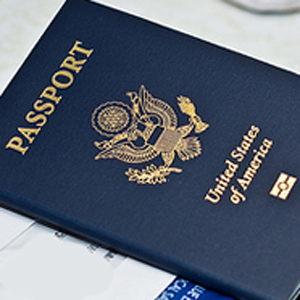
After flying the last 10yrs as a Domestic Flight Attendant, I never got the chance to do much flying as an International Flight Attendant....well, especially since my carrier keeps the two separate. However, I have gone on trips overseas where I needed my US Passport to clear Customs and Immigration control.

When you are a passenger on a flight, or boat, and travel into a different Country, you need to clear their Immigration Control checkpoints. There, the Immigration officer would input your data into a system to check to make sure you aren't an International fugitive, and that you are OK to be in their Country.

When I was based out of Chicago, I did a lot of flying into and out of Canada, and Mexico. Whenever we would clear Customs, the Customs officials would often stamp your passport showing that you were in the Country and that you were OK to be a visitor on Business. The only problem is after a while, your passport would fill up and you would need to pay and order for inserts to put into your Passport. This can get costly (thankfully most carriers reimburse their crew members for Passports and/or Inserts as the Passport is something required for their job)

Now that I'm an International Flight Attendant, I'm noticing that when you are a crew member, there are some Countries that require you to clear through the normal route, and others that don't check your passport just as long as you were on a 'GenDecs' form that has Cargo Documents and Crew names. The only problem is, as being a new International Flight Attendant...along with being a Purser, there is a LOT to learn. Some countries require you to hand over all the documents to the agents before passengers disembark, others require you to keep a few copies so when you go through different checkpoints, you hand over a document to an Immigration Officer.

Some countries require only a Passport, some require a number of forms that can be from just 1 form to 3 or even 4 forms. I know when you travel into Mexico as a visitor (as well as coming into the United States as a visitor) you are given a 'visitor' card that you must keep with you in case you are stopped by authorities to show you are authorized to be in the country. When you leave, you hand in the form.

Some countries require that you go to certain Embassy's to get a Visitor Visa to visit their country either as a visitor or a business traveler. Often times, these Visa's cannot be interchanged and you have to apply for visitor/business Visa separately. Being a airline crew member, majority of our Visa's are designated as a Business Visa and often are reimbursed by the airline, and cannot be used as a visitor to that country.

Upon returning to the United States, we as crew-members have a crew form that we fill out to claim any type of Duty-Free merchandise we bought abroad, or in-flight. It's a pretty simple form and makes it so much easier to enter than having to continuously fill out the normal US Customs forms.
Depending on what city you are arriving to, and how many flights are arriving at the same time, you can either clear customs rather quickly, or it can be a painstakingly long wait to clear customs. Often times, the names have to be correct on the form, or otherwise it might be a little difficult for that crew member to pass through security (LOL)

There is a new way to clear customs through the Global Entry program. It allows citizens and Crew-members to clear customs without having to wait in the long lines to talk with a Customs Border Protection Officer. For a nominal fee, you can get a pass, where all you have to do is go to Kiosks at select airports,  answer select questions, and go on your way. Once you answer the questions, you are given a slip of paper and you show it to a Border Patrol Officer before exiting the Customs area.

I just wish there was a way to know, before hand, which country requires what. Thankfully I've been very fortunate and have had some great crews who have been to the places I have been to so far and know what is required and/or needed. Requirements do change often within certain time frames, but it would still be good to know before you're caught off guard of what is needed.

Another item that would be good is to know what cities/layovers have to offer, but I guess I'll have to save that for another blog posting!

Sunday, July 31, 2011

Finally got my stitches out!

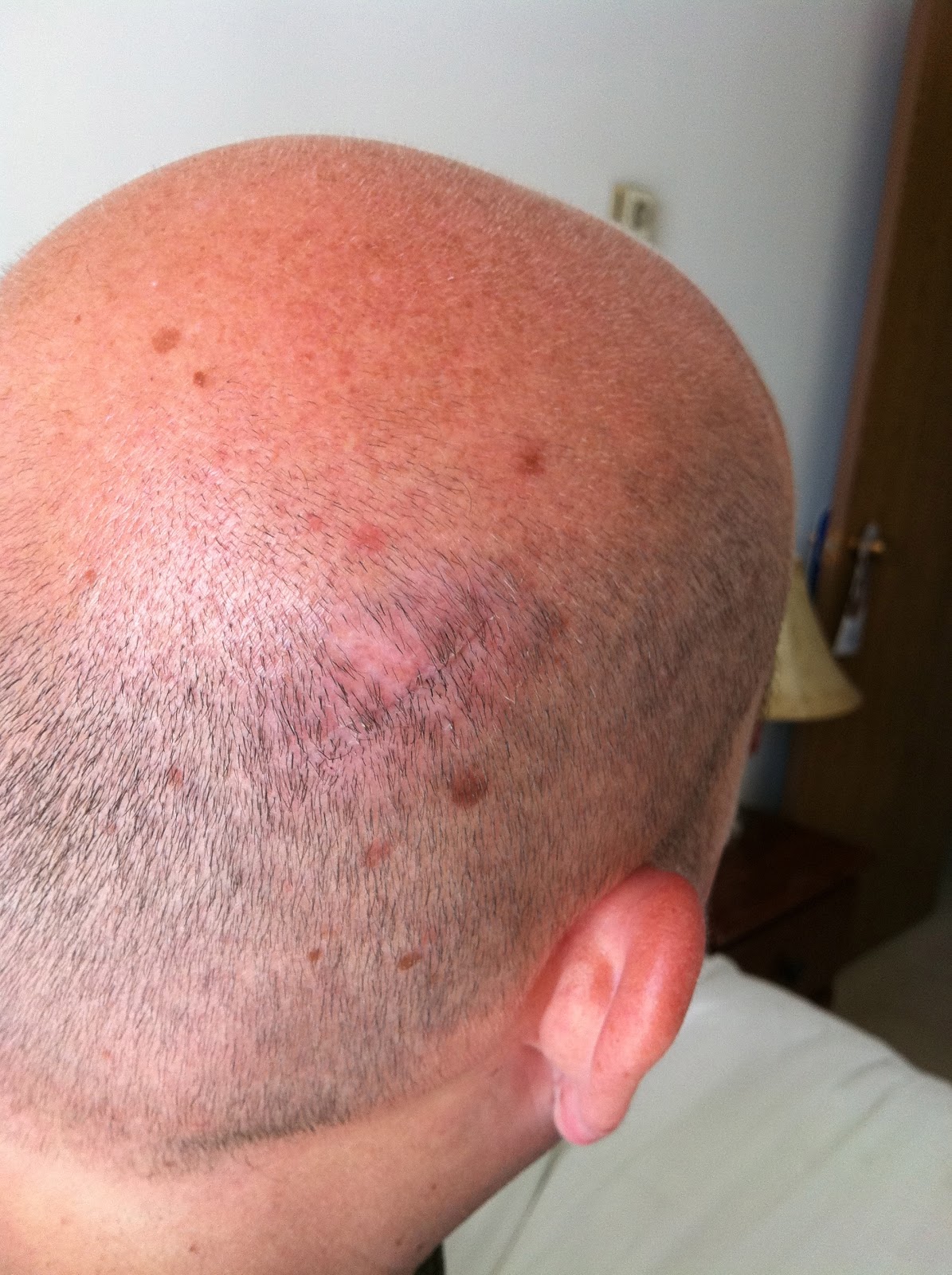
After 9 days having stitches in my head from passing out from Heat Exhaustion/Dehydration, I finally got them out this past Friday. I thought there would have been more pulling as the nurse took them out, but thankfully there was none.

I am still waiting on my Doctor to fill out my Family Leave paperwork. She's giving me just as much of a hard time as my airline does making sure it's filled out correctly. Either way, one can't fly with stitches as your body expands in the air, so it would have pulled the stitches out.

I have been drinking plenty of water since my incident. I'm still amazed how fast everything happened, and how awesome the folks who were with me helped me to ensure I was ok. I even went back to the bar where I fainted and the girls who initially helped out came up to me and asked how I was doing. They were impressed with the stitches and scar, I guess because they saw first hand the wound.

I'm excited to get back to flying tomorrow. It's been a long 11 days doing literally nothing but lounge around resting up. I was so bored that I actually cleaned/dusted my room (which it desperately needed)! Yesterday I decided to cut my hair and hope to remove some of the skin that was still attached to my scar.

I'm quite happy with how my scar turned out. Probably would have been less if I actually received some ointment to put on it, but without anything being applied, I feel it looks good. Now I just have to remember to drink more water during work. I've always been bad about not drinking water while flying/working.


You may not realize it but you can easily suffer from dehydration on airplanes especially on long flights. That's because air in the cabin is usually much dryer than air on Earth. Humidity refers to the amount of water molecules in the air. Our comfort zone as people is around 50% - meaning the air is 50% saturated with water. Air in an airline cabin can fall to as low as 1% on long flights.

Dehydration doesn't only mean you'll feel thirsty. It means your body will lose water so you'll end up having a dry nose, dry scratchy bloodshot eyes, and dry itchy skin. This shouldn't frighten you. There are many ways to get around this. Before boarding your flight, go to one of the stores, or restaurants inside of Security, and buy a bottle of water for yourself.


The first thing you should do is take plenty of bottled water on the flight. Drink about eight ounces of water every hour on the flight. That's about 240 cc/ml. Drink some water before the flight too so your body will be prepared for the dry conditions on the airplane.

If you're already on the airplane and you remember this tip after the airplane has taken off then ask the flight attendants for water. Try to avoid tap water on airplanes. Airplane water IS potable, however some older planes aren't kept up to FDA standards.  Sadly, there aren't many set standards for airplane tap water so avoid drinking it. Remember, if the bottled water is out, you CAN drink the airplane water, but it is highly discouraged.

You might love to drink alcohol and coffee but avoid them on the flight. Alcohol and coffee are diuretic drinks. That means they actually absorb water out of your body cells. They'll actually get you more dehydrated. Stick with the bottled water you bought before boarding the flight, and your body will be just fine.

Immerse a handkerchief in your drinking water and place it above your nose if you want to breathe in humidified air. Wrap it around your ears and place it atop your nose for as long as you desire. You might also want to sprinkle your face with water using a perfume bottle. Fill it in with your own drinking water before the flight. Sure, you'll look funny to those around you, but you're the one who is staying hydrated!

Monday, July 25, 2011

What happens when your body is Dehydrated

There are many things that your body does as a natural resource to help prevent it from going into a dehydration shock, however, when you do go into a shock, it may not be pretty.


  • Heat exhaustion is one part of the spectrum of heat-related illnesses that include, heat cramps, heat exhaustion, and heat stroke.
  • The body cools itself by sweating and allowing that sweat to evaporate. This requires enough fluid in the body to make sweat, air circulating across the skin, and low air humidity to allow that sweat to evaporate.
  • Activity in a hot environment can overwhelm the body's ability to cool itself, causing heat-related symptoms.
  • Symptoms of heat exhaustion include profuse sweating, weakness, nausea, vomiting, headache, lightheadedness, and muscle cramps.
Sometimes, what may happen is a fainting spell.  Fainting, also called syncope (pronounced SIN-ko-pe), is a sudden, brief loss of consciousness and posture caused by decreased blood flow to the brain. Many different conditions can cause fainting. These include heart problems such as irregular heart beat, seizures, panic or anxiety attacks, low blood sugar (hypoglycemia), anemia (a deficiency in healthy oxygen carrying cells), and problems with how the nervous system (the body's system of nerves) regulates blood pressure. Some types of fainting seem to run in families. While fainting may indicate a particular medical condition, sometimes it may occur in an otherwise healthy individual. Fainting is a particular problem for the elderly, who may suffer serious injuries from falls when they faint. Most episodes are very brief. In most cases, the individual who has fainted regains complete consciousness within just a few minutes.

Fainting is a common problem, accounting for 3% of emergency room visits and 6% of hospital admissions. It can happen in otherwise healthy people. A person may feel faint and lightheaded (presyncope) or lose consciousness (syncope).

Last week, the temperature here in the Twin cities was very high, so was the humidity and dew point. (we actually hit our all-time high in dew point), so the air was very thick and heavy.  I remember during the day enjoying about an hour on my balcony getting some sun, however, I wasn't drinking enough water to absorb the amount of water I was sweating.  Let alone the night before I had a couple of alcoholic drinks. (surprisingly not my normal amount)  Either way, I had come in from a trip, exhausted, not drinking much water (which I don't normally do anyway) and now here I am basking in the sun trying to broaden my tan.

Later Wednesday night, I had gone to a friends house for dinner, again not drinking any water, and then we went out to watch a parade at a local bar. Instead of ordering water, I ordered a bottle of beer, and went outside where the temperature was still very high, as well as the dew point, and started to watch the parade. Hoping to watch some local high school bands perform, but was disappointed that the few who were in the parade didn't play past where we were.

I remember telling my friends how boring the parade was, and just leaning against a railing, and looking at my friends phone. Next thing I know, there are about 5 people standing over me asking if I was OK. Apparently I had fainted and hit my head pretty hard on the sidewalk.

I must say, the staff at the bar were extremely helpful and assisted every-way possible to ensure I was good until the paramedics arrived and took over. (darn-it, I should have taken pictures!!!) Initially, a few firemen showed up and gave me oxygen (the mask stunk) along with a couple of Minneapolis police officers asking me questions like, how much was I drinking, what happened, what day was it, who was the President.

Finally the ambulance arrived. I'm escorted into it and lay down on the gurney. I was pretty coherent, but my blood pressure was extremely low,

What is low blood pressure?

Blood pressure is the force exerted by circulating blood on the walls of blood vessels. It constitutes one of the critically important signs of life or vital signs which include heart beat, breathing, and temperature. Blood pressure is generated by the heart pumping blood into the arteries modified by the response of the arteries to the flow of blood.
An individual's blood pressure is expressed as systolic/diastolic blood pressure, for example, 120/80.The systolic blood pressure (the top number) represents the pressure in the arteries as the muscle of the heart contracts and pumps blood into them. The diastolic blood pressure (the bottom number) represents the pressure in the arteries as the muscle of the heart relaxes following its contraction. Blood pressure always is higher when the heart is pumping (squeezing) than when it is relaxing.

as well as my temperature, which I do remember sweating profusely while waiting for the ambulance.

They hooked up an IV and off to my hospital we go (no sirens darn-it!) Once there, go directly into a room, and wait for the on-call doctor. Once he arrived, he took the bandage off and again asked the same questions as before. Then he said he was going to get one of the nurses to come in and clean my wound before he stitched up my wound.

Before this time, I really didn't know the extent of the laceration until I had one of my great friends take a picture of it with my phone. (gotta get this documented or people wouldn't believe me! LOL)

So after another 30 minutes or so, a nurse comes in with a large cart and a big smile and says "I'm here to clean the wound" (no, she wasn't that happy, but it seemed like it) After punching some code into the cart like Nurse Jackie and getting a few supplies out of the cart, she was ready to scrub my wound clean to ensure there was no foreign debris inside my head before the doctor stitched me up. Luckily, the doctor said I only lacerated two layers of skin, so it wasn't deep....but if I didn't get stitched back up, I would have one ugly scar.

I'm not sure how a nurse starts off knowing how to clean a wound, or remove skin when they are new and deals with the first burn patient, or other types of wounds, but I must say, they aren't gentle after a few wounds later. (at least that's what it felt like, I thought she was going to go right through my skull a few times as she was cleaning. I know she was doing her job, but OUCH!)

Finally she was done, and the doctor comes back in to stitch me up. I was lucky in only needing to receive six stitches. I guess after being numb from the cleaning, I didn't feel him stick a needle in my head to give make the area numb for the sewing part, however I could feel and hear the stitches being tied and pulled. (it was almost kinda cool feeling)

I of course had to ask if this was going to mess up my hair, I was reassured that it wouldn't. Although as the nurse was cleaning, she did say she removed a small patch of hair....I just hope it grows back! LOL

The bad part of this whole thing is I can't fly with stitches. Since I'm in a 'recovery' mode, if I fly with a wound (stitches) and expand while in flight, I could re-open the wound and would cause more scaring. I really love flying and am saddened that I can't fly, especially that this is my first month as an International Purser based in Miami!

I should be getting my stitches out hopefully on Friday, and suppose to be back to work the following Monday. Not sure if it's because I'm a little more alert to my body now, but I have been drinking a LOT of water, and very little alcohol. I'm sure that it will be a while before I can enjoy the sun again like I have in the past without feeling a bit groggy and funny.

So if you don't take it from me, at least listen to a doctor about staying hydrated.

"Staying hydrated is fundamentally important to a successful summer exercise regimen, in fact, for any activity," says Survivor consultant Adrian Cohen, MD, of Neutral Bay, Australia. As the medical advisor for many reality shows, including Survivor and Eco Challenge, Cohen has seen firsthand the havoc that dehydration can wreak on performers and performance. "Whilst we tend to focus on hard, sweaty workouts and long jogging sessions, even a brisk walk or a scratch basketball game in the hotter weather puts demands on the human body, and without the 'fuel' (water) the engine runs dry," says Cohen, author of several books including Survivor First Aid.
Successful, balanced hydration starts with prepping yourself for exercising in the heat, says New York City- based sports medicine expert Lewis G. Maharam, MD. "Take 10 days to two weeks to get used to hot weather, building workout intensity and duration gradually," he says. Engage in higher-intensity activities during cooler morning hours and do easier work during the heat of the afternoon, he suggests.

Thursday, July 7, 2011

Sluggo's first trip as an International Purser - Flight Attendant

After 11yrs of flying the Domestic routes with my airline, I've finally been able hold the proffer to fly Internationally. Most airlines have the International and Domestic flying integrated with their flying, however at my airline, it's separate. So it was a great joy to learn that I held the proffer.

In going International, I had to do about 8hrs worth of online training to learn how the services were to be done vs. how they are done domestically. After doing the online training, I then had to go to our training center down in Dallas for a few days to learn the 'ditching' aspect of our Emergency Procedures. I was a fun few days, but very tough as well as we had to make sure how to inflate rafts, learn new commands to evacuate the passengers from the aircraft, and again touch on the service aspects on the long-haul flights.

After training, I transferred to my new base in Miami and started my first flying on July 2nd. It was a tough one, but a good one to start learning the aspects of what the differences are between domestic flying, and my new international flying. When I called our 'reserve' tape to learn of my fate, I learned that I would be working Miami to La Paz, Bolivia, sit for an hour, then fly over to Santa Cruz, Bolivia.

The flying time wasn't bad. It was less than 6hrs, and the service was a basic pre-plated lunch entree, along with a smoked salmon sandwich follow-on service about an hour prior to landing. It felt just like my old JFK-SFO trans-con flights that I use to do.

Amazingly, when we landed in La Paz, I learned that the elevation of the airport was at 13,000ft above sea level. This meant the pilots had to don oxygen masks on landing since we would be so high up. I learned that while on the ground, the local staff bring oxygen in case passengers felt ill or faint while we waited to be cleaned and fueled up for our next leg.

I felt fine, however, the First Officer said that he felt a little dizzy while walking up the jetbridge stairs from doing his walk-around. It was around that time that I realized that Bolivia was on the opposite side of the equator, and they were in their winter months. Sure enough, it had started snowing a little and even formed ice on the wings while we waited.

I was shocked to see how thorough the ground staff was in cleaning the aircraft, as well as do a security sweep of the aircraft. It really made me feel good that security was high on their priority as they took apart all the seat cushions, opened every cabinet and drawers, and checked all the passengers on the plane.

Was all the security checks were done and some new passengers were boarded, we were off to Santa Cruz, Bolivia. It was only an hour flight, so we got there pretty fast. Just like other short flights domestically, there wasn't any service in Main Cabin, but we had a beverage service in First Class. Before we knew it, we were landing by 1am.

Finally got to the hotel around 2am. I was very amazed at how the electricity worked much like a few other hotels I've been to where you have to place your room key into a slot to power everything. I'm actually amazed that more hotels don't utilize this system as they could really save on electricity.

I was suppose to go to a few markets with my fellow crew members, but I didn't wake up until later than we had planned on meeting, besides, it was cloudy, damp, and very windy. I think the temp was around 45degrees F. (of course, the day after was sunny and 60)

I would have loved to gone to the local zoo, local market, or even have gotten a massage at the hotel, but I was extremely tired and kept it quiet. Another thing I was amazed at, the free wifi was faster than some hotels in the US where you have to pay for the service!

Our departure back to Miami was suppose to have been at 12:30am, but we were slightly delayed departing due to some weight and balance issues. Once the pilots figured out what was going on, we were on our way.

I figured that since it was going to be an all-nighter flight, I was expecting a light snack and a follow-on breakfast before landing.  Boy was I wrong! It ended up being a Full-on dinner where I had to plate all the entree's, along with a full ice cream sundae. Something that should have been reserved for dinner, not a late-night supper. The pre-arrival follow-on service was just breakfast breads and juices. The flying time was 6hrs 30mins. I wasn't tired at all since I rested all day, but the other crew members took their breaks (even though they technically weren't suppose to. LOL)

We finally landed in Miami and the flight was done. I had great crew members that helped me tremendously. I can't wait for my next long-haul flight.