Hey Everyone, just a quick update to say I'm still around and have been extremely busy.
Not sure if I'll get back to finishing my posts from my 2018 Caribbean cruise, write about another cruise in 2019, transferring bases for work, first trip to Hong Kong, and advancing my Scuba qualification.
Either way, been very busy flying (work) and staying busy....who knows, maybe I'll get back here and give some updates soon. There are a LOT of things to talk about.
Until then,
Sluggo
Showing posts with label flying. Show all posts
Showing posts with label flying. Show all posts
Tuesday, October 29, 2019

Sunday, July 31, 2011
Finally got my stitches out!

I am still waiting on my Doctor to fill out my Family Leave paperwork. She's giving me just as much of a hard time as my airline does making sure it's filled out correctly. Either way, one can't fly with stitches as your body expands in the air, so it would have pulled the stitches out.
I have been drinking plenty of water since my incident. I'm still amazed how fast everything happened, and how awesome the folks who were with me helped me to ensure I was ok. I even went back to the bar where I fainted and the girls who initially helped out came up to me and asked how I was doing. They were impressed with the stitches and scar, I guess because they saw first hand the wound.
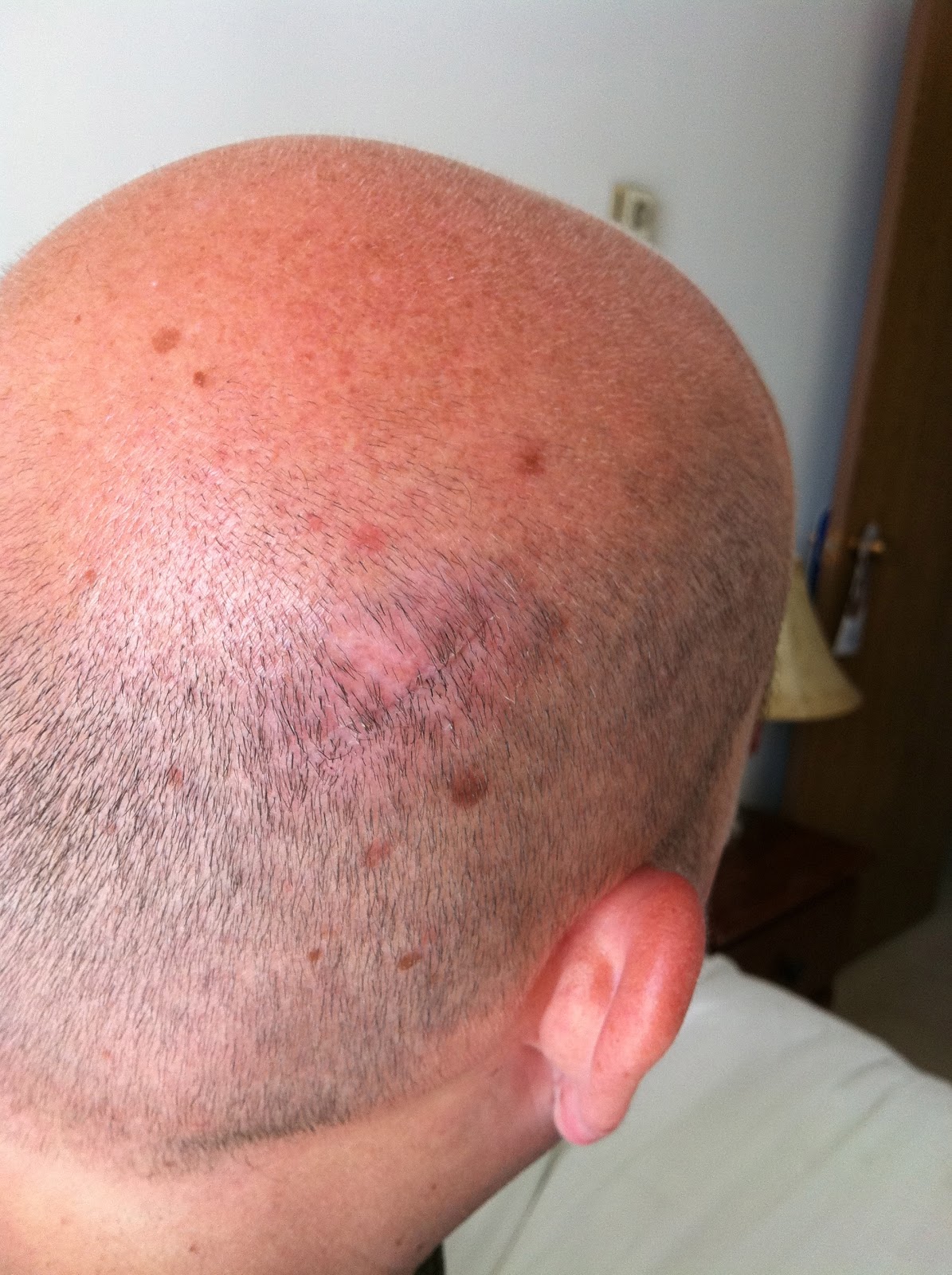
I'm quite happy with how my scar turned out. Probably would have been less if I actually received some ointment to put on it, but without anything being applied, I feel it looks good. Now I just have to remember to drink more water during work. I've always been bad about not drinking water while flying/working.
You may not realize it but you can easily suffer from dehydration on airplanes especially on long flights. That's because air in the cabin is usually much dryer than air on Earth. Humidity refers to the amount of water molecules in the air. Our comfort zone as people is around 50% - meaning the air is 50% saturated with water. Air in an airline cabin can fall to as low as 1% on long flights.

The first thing you should do is take plenty of bottled water on the flight. Drink about eight ounces of water every hour on the flight. That's about 240 cc/ml. Drink some water before the flight too so your body will be prepared for the dry conditions on the airplane.
If you're already on the airplane and you remember this tip after the airplane has taken off then ask the flight attendants for water. Try to avoid tap water on airplanes. Airplane water IS potable, however some older planes aren't kept up to FDA standards. Sadly, there aren't many set standards for airplane tap water so avoid drinking it. Remember, if the bottled water is out, you CAN drink the airplane water, but it is highly discouraged.
You might love to drink alcohol and coffee but avoid them on the flight. Alcohol and coffee are diuretic drinks. That means they actually absorb water out of your body cells. They'll actually get you more dehydrated. Stick with the bottled water you bought before boarding the flight, and your body will be just fine.

Monday, July 25, 2011
What happens when your body is Dehydrated
There are many things that your body does as a natural resource to help prevent it from going into a dehydration shock, however, when you do go into a shock, it may not be pretty.
Fainting is a common problem, accounting for 3% of emergency room visits and 6% of hospital admissions. It can happen in otherwise healthy people. A person may feel faint and lightheaded (presyncope) or lose consciousness (syncope).
 Last week, the temperature here in the Twin cities was very high, so was the humidity and dew point. (we actually hit our all-time high in dew point), so the air was very thick and heavy. I remember during the day enjoying about an hour on my balcony getting some sun, however, I wasn't drinking enough water to absorb the amount of water I was sweating. Let alone the night before I had a couple of alcoholic drinks. (surprisingly not my normal amount) Either way, I had come in from a trip, exhausted, not drinking much water (which I don't normally do anyway) and now here I am basking in the sun trying to broaden my tan.
Later Wednesday night, I had gone to a friends house for dinner, again not drinking any water, and then we went out to watch a parade at a local bar. Instead of ordering water, I ordered a bottle of beer, and went outside where the temperature was still very high, as well as the dew point, and started to watch the parade. Hoping to watch some local high school bands perform, but was disappointed that the few who were in the parade didn't play past where we were.
I remember telling my friends how boring the parade was, and just leaning against a railing, and looking at my friends phone. Next thing I know, there are about 5 people standing over me asking if I was OK. Apparently I had fainted and hit my head pretty hard on the sidewalk.
I must say, the staff at the bar were extremely helpful and assisted every-way possible to ensure I was good until the paramedics arrived and took over. (darn-it, I should have taken pictures!!!) Initially, a few firemen showed up and gave me oxygen (the mask stunk) along with a couple of Minneapolis police officers asking me questions like, how much was I drinking, what happened, what day was it, who was the President.
Finally the ambulance arrived. I'm escorted into it and lay down on the gurney. I was pretty coherent, but my blood pressure was extremely low,
as well as my temperature, which I do remember sweating profusely while waiting for the ambulance.
 They hooked up an IV and off to my hospital we go (no sirens darn-it!) Once there, go directly into a room, and wait for the on-call doctor. Once he arrived, he took the bandage off and again asked the same questions as before. Then he said he was going to get one of the nurses to come in and clean my wound before he stitched up my wound.
Before this time, I really didn't know the extent of the laceration until I had one of my great friends take a picture of it with my phone. (gotta get this documented or people wouldn't believe me! LOL)
So after another 30 minutes or so, a nurse comes in with a large cart and a big smile and says "I'm here to clean the wound" (no, she wasn't that happy, but it seemed like it) After punching some code into the cart like Nurse Jackie and getting a few supplies out of the cart, she was ready to scrub my wound clean to ensure there was no foreign debris inside my head before the doctor stitched me up. Luckily, the doctor said I only lacerated two layers of skin, so it wasn't deep....but if I didn't get stitched back up, I would have one ugly scar.
I'm not sure how a nurse starts off knowing how to clean a wound, or remove skin when they are new and deals with the first burn patient, or other types of wounds, but I must say, they aren't gentle after a few wounds later. (at least that's what it felt like, I thought she was going to go right through my skull a few times as she was cleaning. I know she was doing her job, but OUCH!)
 Finally she was done, and the doctor comes back in to stitch me up. I was lucky in only needing to receive six stitches. I guess after being numb from the cleaning, I didn't feel him stick a needle in my head to give make the area numb for the sewing part, however I could feel and hear the stitches being tied and pulled. (it was almost kinda cool feeling)
I of course had to ask if this was going to mess up my hair, I was reassured that it wouldn't. Although as the nurse was cleaning, she did say she removed a small patch of hair....I just hope it grows back! LOL
The bad part of this whole thing is I can't fly with stitches. Since I'm in a 'recovery' mode, if I fly with a wound (stitches) and expand while in flight, I could re-open the wound and would cause more scaring. I really love flying and am saddened that I can't fly, especially that this is my first month as an International Purser based in Miami!
I should be getting my stitches out hopefully on Friday, and suppose to be back to work the following Monday. Not sure if it's because I'm a little more alert to my body now, but I have been drinking a LOT of water, and very little alcohol. I'm sure that it will be a while before I can enjoy the sun again like I have in the past without feeling a bit groggy and funny.
So if you don't take it from me, at least listen to a doctor about staying hydrated.
- Heat exhaustion is one part of the spectrum of heat-related illnesses that include, heat cramps, heat exhaustion, and heat stroke.
- The body cools itself by sweating and allowing that sweat to evaporate. This requires enough fluid in the body to make sweat, air circulating across the skin, and low air humidity to allow that sweat to evaporate.
- Activity in a hot environment can overwhelm the body's ability to cool itself, causing heat-related symptoms.
- Symptoms of heat exhaustion include profuse sweating, weakness, nausea, vomiting, headache, lightheadedness, and muscle cramps.
Fainting is a common problem, accounting for 3% of emergency room visits and 6% of hospital admissions. It can happen in otherwise healthy people. A person may feel faint and lightheaded (presyncope) or lose consciousness (syncope).

Later Wednesday night, I had gone to a friends house for dinner, again not drinking any water, and then we went out to watch a parade at a local bar. Instead of ordering water, I ordered a bottle of beer, and went outside where the temperature was still very high, as well as the dew point, and started to watch the parade. Hoping to watch some local high school bands perform, but was disappointed that the few who were in the parade didn't play past where we were.
I remember telling my friends how boring the parade was, and just leaning against a railing, and looking at my friends phone. Next thing I know, there are about 5 people standing over me asking if I was OK. Apparently I had fainted and hit my head pretty hard on the sidewalk.
I must say, the staff at the bar were extremely helpful and assisted every-way possible to ensure I was good until the paramedics arrived and took over. (darn-it, I should have taken pictures!!!) Initially, a few firemen showed up and gave me oxygen (the mask stunk) along with a couple of Minneapolis police officers asking me questions like, how much was I drinking, what happened, what day was it, who was the President.
Finally the ambulance arrived. I'm escorted into it and lay down on the gurney. I was pretty coherent, but my blood pressure was extremely low,
What is low blood pressure?
Blood pressure is the force exerted by circulating blood on the walls of blood vessels. It constitutes one of the critically important signs of life or vital signs which include heart beat, breathing, and temperature. Blood pressure is generated by the heart pumping blood into the arteries modified by the response of the arteries to the flow of blood.
An individual's blood pressure is expressed as systolic/diastolic blood pressure, for example, 120/80.The systolic blood pressure (the top number) represents the pressure in the arteries as the muscle of the heart contracts and pumps blood into them. The diastolic blood pressure (the bottom number) represents the pressure in the arteries as the muscle of the heart relaxes following its contraction. Blood pressure always is higher when the heart is pumping (squeezing) than when it is relaxing.
as well as my temperature, which I do remember sweating profusely while waiting for the ambulance.

Before this time, I really didn't know the extent of the laceration until I had one of my great friends take a picture of it with my phone. (gotta get this documented or people wouldn't believe me! LOL)
So after another 30 minutes or so, a nurse comes in with a large cart and a big smile and says "I'm here to clean the wound" (no, she wasn't that happy, but it seemed like it) After punching some code into the cart like Nurse Jackie and getting a few supplies out of the cart, she was ready to scrub my wound clean to ensure there was no foreign debris inside my head before the doctor stitched me up. Luckily, the doctor said I only lacerated two layers of skin, so it wasn't deep....but if I didn't get stitched back up, I would have one ugly scar.
I'm not sure how a nurse starts off knowing how to clean a wound, or remove skin when they are new and deals with the first burn patient, or other types of wounds, but I must say, they aren't gentle after a few wounds later. (at least that's what it felt like, I thought she was going to go right through my skull a few times as she was cleaning. I know she was doing her job, but OUCH!)

I of course had to ask if this was going to mess up my hair, I was reassured that it wouldn't. Although as the nurse was cleaning, she did say she removed a small patch of hair....I just hope it grows back! LOL
The bad part of this whole thing is I can't fly with stitches. Since I'm in a 'recovery' mode, if I fly with a wound (stitches) and expand while in flight, I could re-open the wound and would cause more scaring. I really love flying and am saddened that I can't fly, especially that this is my first month as an International Purser based in Miami!
I should be getting my stitches out hopefully on Friday, and suppose to be back to work the following Monday. Not sure if it's because I'm a little more alert to my body now, but I have been drinking a LOT of water, and very little alcohol. I'm sure that it will be a while before I can enjoy the sun again like I have in the past without feeling a bit groggy and funny.
So if you don't take it from me, at least listen to a doctor about staying hydrated.
"Staying hydrated is fundamentally important to a successful summer exercise regimen, in fact, for any activity," says Survivor consultant Adrian Cohen, MD, of Neutral Bay, Australia. As the medical advisor for many reality shows, including Survivor and Eco Challenge, Cohen has seen firsthand the havoc that dehydration can wreak on performers and performance. "Whilst we tend to focus on hard, sweaty workouts and long jogging sessions, even a brisk walk or a scratch basketball game in the hotter weather puts demands on the human body, and without the 'fuel' (water) the engine runs dry," says Cohen, author of several books including Survivor First Aid.
Successful, balanced hydration starts with prepping yourself for exercising in the heat, says New York City- based sports medicine expert Lewis G. Maharam, MD. "Take 10 days to two weeks to get used to hot weather, building workout intensity and duration gradually," he says. Engage in higher-intensity activities during cooler morning hours and do easier work during the heat of the afternoon, he suggests.
Wednesday, December 1, 2010
American Airlines 5@5

American Airlines is cashless and accepts major credit or debit cards for in-flight purchases. American Eagle and American Connection only accept cash for purchases made onboard.
To see what beverages American has to offer, click here.
Non-alcoholic beverages will continue to be complimentary in Economy Class, as they are today.
Wednesday, May 19, 2010
Busy with School and Flying, it's hard to keep updating my blog
It's hard to believe that once again, how lax in my posting abilities have been for my blog. I do apologize for that. I know it's hard to believe to some, even though I talk a lot in person, I was never good at maintaining daily diaries or even doing any type of journal. so, SORRY everyone!
Anyway, what's been going on with Sluggo? Well, I'll try to recap the best of my ability and see how well that goes.
I just completed my 2nd year, 4th semester with the University of Phoenix. So far, I've completed a total of 18 classes! The experience has truly been unbelievable. I've had many great semesters, a couple of interesting semesters, and then there was my math!
For those that actually know me, either via facebook, drum corps, or flying, you know how much I was dreading my math courses. I am proud to say that I passed both semesters of math, and hopefully do NOT have to think about math again! It's hard enough counting to 21....but I was able to manage!
Besides school, I've been focusing on my flying these last few months. I haven't been able to hold my usual trans-con flying due to AA reducing flight attendant staffing over on the International side. This meant that many of the junior International FAs were sent back to Domestic. Majority of them were senior to me, so I wasn't able to hold the lines I generally fly.
I was able to pick up a few extra trips here and there, but mostly just flew my schedule. It does become a little interesting when you commute from Minneapolis (MSP) to NYC. With the merger of Northwest and Delta, Delta has started to reduce many of their flights between MSP and NYC. So, I have to start flying on us and connect through Chicago (ORD).
At the beginning of this month, I was able to go back to my hometown of Winchester, VA. I try to go at least every six months or so to visit family and friends. One of the great aspects of going home in May is the Shenandoah Apple Blossom Festival. Winchester has celebrated the blooming of the Apple Trees for over 83yrs, and this year was no exception.

 The festival has expanded from being only a weekend event to a full week. There is Wine tasting, sports luncheon, stag luncheon, apple pie baking contest, Music Festival, Firefighters Parade, Grand Feature Parade, 10K race, carnival, circus, arts and crafts, Coronation of the Queen, and of course, plenty of different food vendors from around the country.
 The festival has had many notable celebrities over the years, Bob Hope, Lucille Ball, Joan Rivers, President Ford, and this year Val Kilmar. I was a little disappointed in seeing how much weight Val had put on, but it was fun to have him visit our little community for The Bloom.
Each year it has become more and more difficult for the festival to get a celebrity to commit to the weekend activities. Most actors and actresses have very full schedules, so many will only commit at the last minute, or as their time permits.
 Friday morning, my mom and I went to the raising of the tent for the Cole Brother Circus. It had been many years since I had watched the tent being raised, but it was very interesting to see the changes. I remember how the hard workers use to pound the stakes into the ground, now they use a 4-wheel bobcat with a jack-hammer on the end of it. When it was time for the tent to be raised, Elephants were used, but now it's all hydraulics.

 The fun part about being there so early, we were able to see the different animals. Of course the main attraction that we liked were the elephants, but there were tigers as well. It was fun to be so close to the animals. The Elephants were chained to the truck they came on, and of course, the tigers were in cages.

 Before we knew it, the tent was being raised and work had started putting up the 3-Rings in the middle as well as the Bleachers.
As my mom mentioned, there wasn't much talking between the employee's of the circus. Once in a while, someone would whistle to get the attention of someone else, but everyone worked hard laying out the tent, and getting the large arena ready for their first performance later in the evening.
 One of the events that I enjoy the most are the Parades. Friday night is the Fireman's Parade and Saturday is the Grand Feature Parade. Both parades follow the same route, which is roughly 2 miles long. If the weather is a little cooler, the parade route is pleasant for the bands to march, but if it's hot and humid, which it was (85-90 degrees) then it can be torture for the long 2 1/2 hour marching route by foot. Of course, the Music Judges stand is at the end of the route to judge the bands endurance of the long route.
Having marched this parade for many years, I can understand how difficult it can be for some of the bands that never performed in this parade, especially during extreme hot weather! The bands are judged on Marching, Auxiliary (guard/flags), Musicality, and the Drum Major.
When I was in school, the Festival was a large event for the bands. There use to be a Jazz Band Competition, Concert Band Competition, both Parades, and after the Grand Feature Parade, there was the Field Show Competition. However, by mid-90s, many music programs were starting to be cut, so the Field Show Competition was no longer.
Now, there is just Jazz, Concert, and the Parades. Many bands go to the larger venues which are part of Fiesta-Val where bands travel to New York City, Myrtle Beach, or even Orlando. This way, as soon as the bands are done with part of their competition, they can allow the kids to do different activities at a large amusement park.
Anyway, it was a great visit to be home to visit family and friends.
Anyway, what's been going on with Sluggo? Well, I'll try to recap the best of my ability and see how well that goes.
I just completed my 2nd year, 4th semester with the University of Phoenix. So far, I've completed a total of 18 classes! The experience has truly been unbelievable. I've had many great semesters, a couple of interesting semesters, and then there was my math!
For those that actually know me, either via facebook, drum corps, or flying, you know how much I was dreading my math courses. I am proud to say that I passed both semesters of math, and hopefully do NOT have to think about math again! It's hard enough counting to 21....but I was able to manage!
Besides school, I've been focusing on my flying these last few months. I haven't been able to hold my usual trans-con flying due to AA reducing flight attendant staffing over on the International side. This meant that many of the junior International FAs were sent back to Domestic. Majority of them were senior to me, so I wasn't able to hold the lines I generally fly.
I was able to pick up a few extra trips here and there, but mostly just flew my schedule. It does become a little interesting when you commute from Minneapolis (MSP) to NYC. With the merger of Northwest and Delta, Delta has started to reduce many of their flights between MSP and NYC. So, I have to start flying on us and connect through Chicago (ORD).
At the beginning of this month, I was able to go back to my hometown of Winchester, VA. I try to go at least every six months or so to visit family and friends. One of the great aspects of going home in May is the Shenandoah Apple Blossom Festival. Winchester has celebrated the blooming of the Apple Trees for over 83yrs, and this year was no exception.

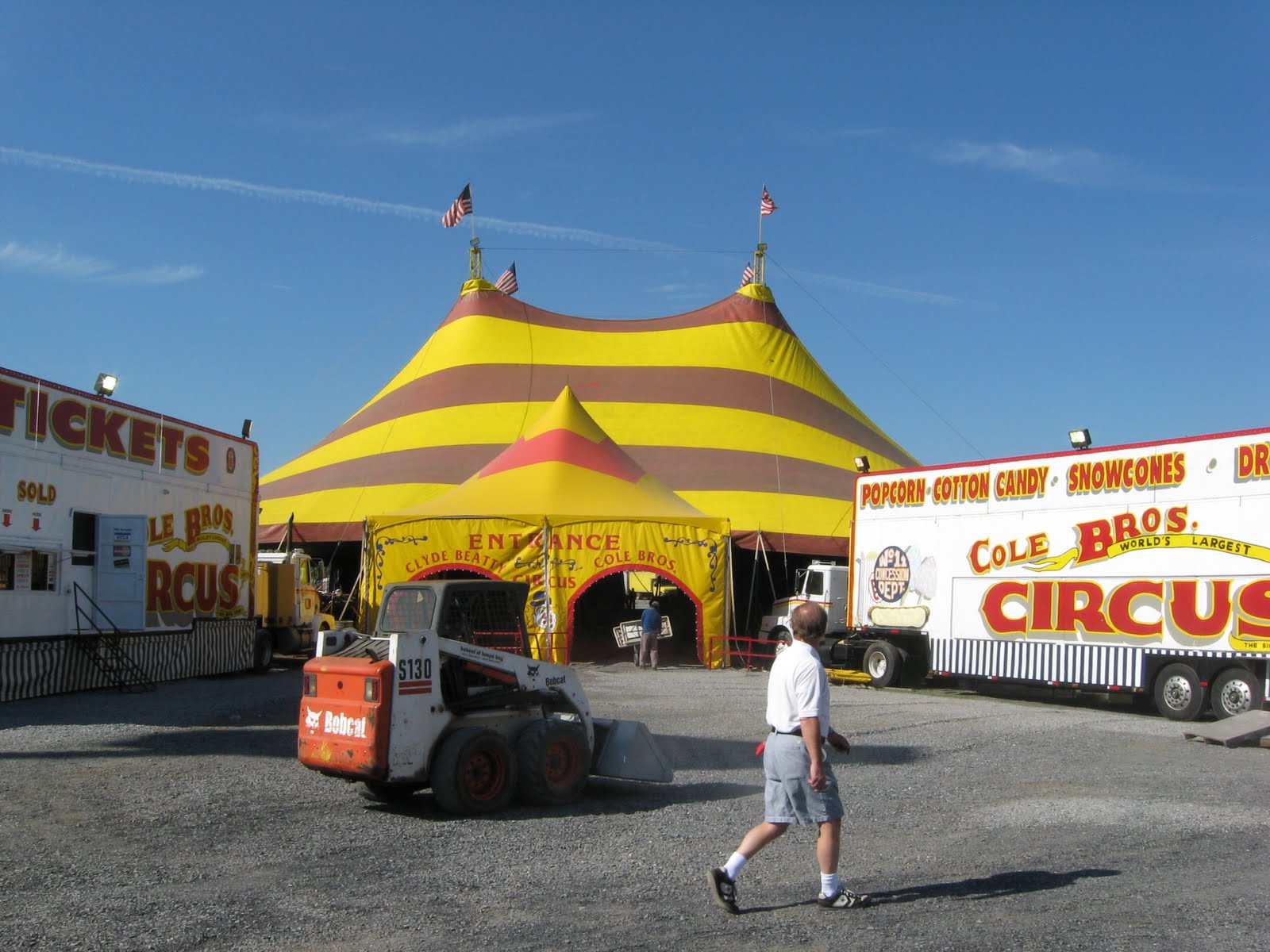 The festival has expanded from being only a weekend event to a full week. There is Wine tasting, sports luncheon, stag luncheon, apple pie baking contest, Music Festival, Firefighters Parade, Grand Feature Parade, 10K race, carnival, circus, arts and crafts, Coronation of the Queen, and of course, plenty of different food vendors from around the country.
Each year it has become more and more difficult for the festival to get a celebrity to commit to the weekend activities. Most actors and actresses have very full schedules, so many will only commit at the last minute, or as their time permits.


 The fun part about being there so early, we were able to see the different animals. Of course the main attraction that we liked were the elephants, but there were tigers as well. It was fun to be so close to the animals. The Elephants were chained to the truck they came on, and of course, the tigers were in cages.
 Before we knew it, the tent was being raised and work had started putting up the 3-Rings in the middle as well as the Bleachers.
As my mom mentioned, there wasn't much talking between the employee's of the circus. Once in a while, someone would whistle to get the attention of someone else, but everyone worked hard laying out the tent, and getting the large arena ready for their first performance later in the evening.
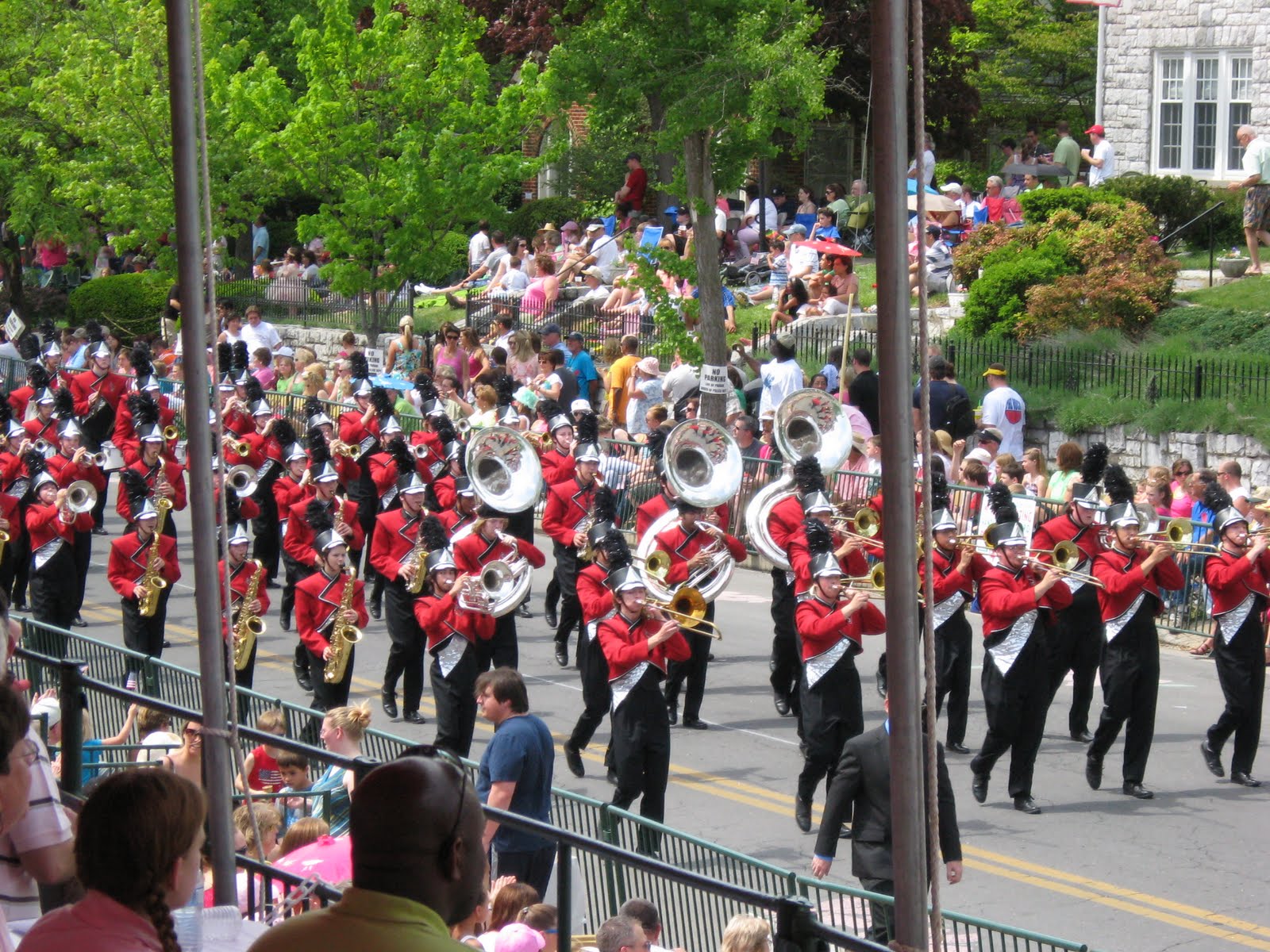
Having marched this parade for many years, I can understand how difficult it can be for some of the bands that never performed in this parade, especially during extreme hot weather! The bands are judged on Marching, Auxiliary (guard/flags), Musicality, and the Drum Major.
When I was in school, the Festival was a large event for the bands. There use to be a Jazz Band Competition, Concert Band Competition, both Parades, and after the Grand Feature Parade, there was the Field Show Competition. However, by mid-90s, many music programs were starting to be cut, so the Field Show Competition was no longer.
Now, there is just Jazz, Concert, and the Parades. Many bands go to the larger venues which are part of Fiesta-Val where bands travel to New York City, Myrtle Beach, or even Orlando. This way, as soon as the bands are done with part of their competition, they can allow the kids to do different activities at a large amusement park.
Anyway, it was a great visit to be home to visit family and friends.
Wednesday, March 31, 2010
I'm sorry, but you have to wait for an agent...
It never fails that when I'm inside the terminal, checking the computer for my work information, in uniform, and a passenger walks up and starts requesting information about something I have no clue what they are talking about. Often it's about switching seats, or get a seat assignment because they are 'standing by' for a flight and haven't received a seat assignment.
 One of the things to differentiate Pilots, Flight Attendants, and actual gate agents is agents do NOT have any sort of wings, or stripes on their uniform. These are reserved for pilots and flight attendants.
Both pilots and flight attendants will often have their roller-board bags with them, and are quickly checking the status of their schedule, or looking to see what is going on for their next flight. They don't have any ability to look at a seat map of the plane and check a passenger in, or switch seats to accommodate a family of four.
 Sure, pilots may have a bit more information about a possible delay, but they usually don't know any more about seats than flight attendants do. Pilots, whether the Captain or First Officer, will have stripes on their sleeves, as well as epaulets on their shirts. Many pilots wear hats that have a lightening bolt on it (captains) or hats as shown on the left. Either way, we can't give information about Upgrades, seat-swaps, or anything like that.
The biggest customers who request info from Flight Attendants or Pilots are surprisingly the Frequent Flier. I'm always amazed because they fly so often, they know what a pilot or flight attendant uniform looks like (Wings, stripes, bags) vs. an agent who is actually stuck behind the counter being hounded by other passengers regarding their Upgrades, seat-swaps, or other questions.
 I also wonder why passenger ask the TSA what gates their flights are leaving out of when there are monitors, 99.99% of the time right at the checkpoints. I've witnessed people getting mad at the TSA because their flight wasn't listed, or shows "Final Boarding", but why get upset at the TSA? They are there to screen bags, test for explosives, and make sure that potential terrorists don't make it to your plane, not know where your gate is.

Both pilots and flight attendants will often have their roller-board bags with them, and are quickly checking the status of their schedule, or looking to see what is going on for their next flight. They don't have any ability to look at a seat map of the plane and check a passenger in, or switch seats to accommodate a family of four.

The biggest customers who request info from Flight Attendants or Pilots are surprisingly the Frequent Flier. I'm always amazed because they fly so often, they know what a pilot or flight attendant uniform looks like (Wings, stripes, bags) vs. an agent who is actually stuck behind the counter being hounded by other passengers regarding their Upgrades, seat-swaps, or other questions.

Sunday, March 7, 2010
When the seatbelt sign goes on, it doesn't mean to get up and stretch
One of the things that continues to amaze me as a cabin safety professional is how the general public does not regard the safety precautions that are in place for their own safety.
 Per Federal Aviation Regulation 121.317, Passenger information requirements, smoking prohibitions, and additional seat belt requirements states: A certificate holder may operate a nontransport category airplane type certificated after December 31, 1964, that is manufactured before December 20, 1997, if it is equipped with at least one placard that is legible to each person seated in the cabin that states “Fasten Seat Belt,” and if, during any movement on the surface, for each takeoff, for each landing, and at any other time considered necessary by the pilot in command, a crewmember orally instructs the passengers to fasten their seat belts.
I am continually amazed at how when the flight starts to get turbulent, and the crew members are having difficulty walking about the cabin performing their duties, and the captain will turn on the seatbelt sign, it never fails that at least 3-5 people will get up and stretch. They do this as if "HAHA, look at me, I can defy the seatbelt sign".
Well, here are some reports to show that one should NOT get up out of their seat while the seatbelt sign is on. (well, it is common sense isn't it?)
 People were flying around
Three people were injured due to turbulence
Seven slightly injured after Qantas plane plummets due to turbulence
26 passengers injured by turbulence on Continental plane
Flight Attendants and passengers injured due to turbulence on Air Canada
 Even when the sign is not on, you should always keep your seatbelt on because you never know when that "Clear Air Turbulence" is going to hit. It may be an extremely smooth flight, you forget that you are flying in a metal tin can and BOOM, you drop 500-1000ft in seconds without any notice.
Whenever I travel, I keep my seatbelt on just like I do while driving or riding in a car. You never know when another idiot is going to sideswipe you and you could be in a serious accident. Yet, people don't care for not only their own safety, but the safety of those around them.
Please use common sense and just remain in your seat. Remember that if you do get up and the cabin crew are strapped in their seats, it's probably a good idea to immediately take your seat. They are required to inform you that "Per the FAA, the seatbelt sign is illuminated". Don't just ignore them and do your own thing, it is not just for your safety, but to those around you as well.

I am continually amazed at how when the flight starts to get turbulent, and the crew members are having difficulty walking about the cabin performing their duties, and the captain will turn on the seatbelt sign, it never fails that at least 3-5 people will get up and stretch. They do this as if "HAHA, look at me, I can defy the seatbelt sign".
Well, here are some reports to show that one should NOT get up out of their seat while the seatbelt sign is on. (well, it is common sense isn't it?)

Three people were injured due to turbulence
Seven slightly injured after Qantas plane plummets due to turbulence
26 passengers injured by turbulence on Continental plane
Flight Attendants and passengers injured due to turbulence on Air Canada

Whenever I travel, I keep my seatbelt on just like I do while driving or riding in a car. You never know when another idiot is going to sideswipe you and you could be in a serious accident. Yet, people don't care for not only their own safety, but the safety of those around them.
Please use common sense and just remain in your seat. Remember that if you do get up and the cabin crew are strapped in their seats, it's probably a good idea to immediately take your seat. They are required to inform you that "Per the FAA, the seatbelt sign is illuminated". Don't just ignore them and do your own thing, it is not just for your safety, but to those around you as well.
Tuesday, December 8, 2009
Alcohol in the Sky

This is great to have a beverage during a lengthy delay, but do remember that Federal Air Regulations 121.575, and 91.17 state that "No certificate holder may allow any person to board any of its aircraft if that person appears to be intoxicated", as well as, "no pilot of a civil aircraft may allow a person who appears to be intoxicated or who demonstrates by manner or physical indications that the individual is under the influence of drugs (except a medical patient under proper care) to be carried in that aircraft."
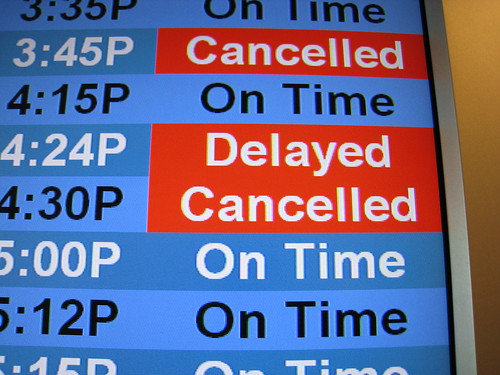
Alright, well those regulations are for restricting drunk passengers get onto the airplane, but what about while on the plane? Believe it or not, the same FARs hold true, and when a passenger gets out of hand in-flight, they could be met by law enforcement upon arrival...something you don't want to have happen!
So whose to blame if you get intoxicated while in-flight? Well, it actually comes down to the consumer. Flight Attendants aren't bar tenders, and with all the other Safety Related things they need to worry about while working, a drunk passenger shouldn't be one of them.
 One thing people need to know about alcohol and flying, is it affects your body differently in the plane, than it does while on the ground. The cabin altitude is generally set between 5,000 and 7,000 feet-meaning that there’s less oxygen to breathe. While your blood alcohol level remains the same as it would be at sea level, it feels as if you’ve drunk a lot more. Never mind that the cabin humidity is often less than 10 percent, and that alcohol dehydrates you.
Over the years, there have been many issues where you may have heard about intoxicated passengers:

I'm not saying that you shouldn't drink...by all means, DRINK, just drink moderately. Do remember that the altitude will affect your body differently than you would be at sea level, so be careful. Just because you normally drink 5 beverages at the bar, doesn't mean you can actually handle 5 beverages in the air. A plane is not a bar. If someone drinks too much at their favorite tavern, they can push that person out the door and call him a cab. Try doing that at 30,000 feet.
 If your drink gets low, don't ever say “Hey, stewardess!” The term “stewardess” and “steward” are widely considered to be archaic, if not derogatory. They are especially offensive if they’re used while, at the same time, you repeatedly press the flight attendant “call” button over your seat. Flight attendants are not airborne waiters. They are bona fide crew members who have undergone many hours of safety training. Yeah, they serve drinks but if the plane goes down, they can also save your butt.
To quote a selection from Christopher Elliott's page which highlight some idea's about alcohol on flights.
1. Alcohol heightens a stressful experience.
Unless you haven’t flown in a few years, you probably know that air travel is getting more stressful. Alcohol can make it worse, say experts. “Drinking on planes has unique hazards, particularly as flying becomes more stressful,” says Karen Sternheimer, a sociologist who teaches at the University of Southern California. “If there is a long delay on the tarmac the irritation can be magnified by alcohol.” At a bare minimum, passengers need to be sober enough to understand and cooperate with crew instructions. “Under increasingly stressful conditions, too much alcohol can make a simple annoyance into a serious problem,” she adds.
2. There’s nowhere to run.
Anywhere else, you can walk away from an unruly drunk. But not on a plane. “It’s a metal tube and blasting off at hundreds of miles per hour,” says Jeffrey Lord, a veteran frequent flier based in Burlington, Vt. (Lord believes alcohol isn’t the only problem on a plane. “How about spending hours strapped in with these stressed-out companions with nothing other than caffeinated beverages being served?” he asks. Good point.)
3. Drinks on a plane aren’t just intoxicating — they’re toxic.
“Higher altitudes do amplify the affect of alcohol, which, as you can imagine, can cause problems for passengers that imbibe too much,” says Ashley Halsey, a spokeswoman for American Behavioral, a healthcare organization that specializes in drug and alcohol abuse and treatment for employers. “Because alcohol impairs judgment, the likelihood of violent or other anti-social behavior is increased. When people fly, they also get dehydrated, and alcoholics tend to drink alcohol instead of water, which tends to increase their adverse reaction.”
4. It’s annoying.
Just listen to Terry Ward’s account of her last flight from Orlando to Newark. “I sat next to a group of guys who were on their way to Montreal for a boys’ weekend,” she remembers. “They started drinking right after we took off and didn’t stop. Hard liquor the whole flight.
I thought the flight attendants would stop serving them but they didn’t, because one of the guys was tipping them $20 each round.” Instead of cutting off the passengers, she made all of their drinks doubles, as they requested. “It was completely obnoxious,” she adds.
5. It’s embarrassing, too.
Who doesn’t have a story to tell about having one too many on a plane? Here’s Denise Vardakas’. She and her mother were flying from San Diego to Grand Cayman, and on their final leg they enjoyed “endless Jack and Diet Cokes.” She adds, “We were having a great time chatting with the crew members, and a few of our fellow passengers.” On their way back a week later, the same crewmembers greeted them as the “Jack and Diet” ladies. Oh, my.
6. You could relapse.
If you’re off the booze, a plane trip is a relapse waiting to happen, say experts. “I’m still constantly surprised by how many of my patients will relapse or overdrink on planes,” says Carrie Wilkens, the co-founder and clinical director of the Center for Motivation & Change, a private group practice in New York that specializes in treating addiction and compulsive behaviors.
“It’s gotten to the point where I’ve heard it as a therapist so regularly that now, when any one of my clients is planning a trip, I tell them, ‘OK, we have to make up a plan for how you’re going to manage this flight.’” Her patients inevitably agree that they drink more in the air, and take precautions to avoid it.
7. How are you getting home?
Even if you survive your flight without incident, there remains the issue of getting back home. If you’re planning to drive, you might keep the case of Dana Papst in mind. A few years ago, after disembarking from a US Airways flight on which he was served alcohol, he crashed his car, killing himself and five others. The FAA later cleared the airline of any wrongdoing.
I don’t consider myself a modern-day prohibitionist, but I think these practical reasons for keeping the skies alcohol-free make sense.
Why not wait until you’re home to crack open a bottle? It could make your next flight a better one — if not save your life.
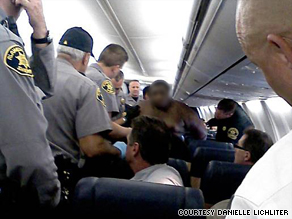


 As on the ground, if you must drink in-flight, please drink responsibly and know when you are starting to get tipsy. Don't leave it up to the Flight Crew to put a stop to your enjoyment. Be sure to drink plenty of water, more than you normally would while at a regular bar on the ground.
 Monday, October 26, 2009
What do Mileage Runners do?

Subscribe to:
Posts (Atom)