Showing posts with label cell phones. Show all posts

Tuesday, December 17, 2013

Use of Approved Handheld Personal Electronic Devices

Back in November, and after extensive research, the FAA has concluded that customers can safely use handheld personal electronic devices (PEDs) during taxi, take-off, and landing and has expanded the approval for use of handheld PEDs to include all phases of flight, with limited exceptions. This approval applies to departures and arrivals in the U.S.  ONLY.

What is changed?
 
  • Customers may use smartphones, tablets, electronic readers, MP3 players and other similarly-sized devices during taxi take-off and landing in the U.S., with limited exceptions.
    • Exception: Certain instrument approach landings, known as CAT 2 or CAT 3, require all electronic devices to be turned off. The flight deck will notify Flight Attendants when this is necessary.
  • Larger electronic devices, such as laptop computers, are NOT considered handheld PEDs and must be stowed in an approved stowage location during taxi, take-off and landing.
  • Approved handheld PEDs must be secured for taxi, take-off, and landing. Secured is defined as being kept controlled by the customer, e.g. held in the hand, seatback pocket or personal pocket rather than laying on the seat.
  • Airlines have received FAA approval to allow customers to stow lightweight items in seatback pockets for all phases of flight, including taxi, take-off, and landing.  
  • Items restrained in the seatback pocket must:
    • Not exceed a total of 3 pounds
    • Not block or hinder passenger egress
    • Be properly restrained to prevent being dislodged 
       
  • The following are some examples of some items that are acceptable and not acceptable for seatback pocket stowage: 
     
Acceptable Not Acceptable
  • Safety Instruction Cards
  • Magazines
  • Airsick bags
  • MP3 players
  • Eyeglasses
  • Cell phones
  • Tablets
  • Beverage (less than 32 fl oz) and small food items
  • Laptop computers
  • Purses (handbags or pocketbooks)
  • DVD players
  • Camera bags

  What has not changed? 
  • Cellular functions are still not permitted for taxi out, take-off or landing. All electronic devices must be placed in airplane mode. Cell phone calls are permitted after landing on arrivals into the U.S. and U.S. territories as they are today.
  • Voice Over Internet Protocol (VOIP) calls remain prohibited. Our current Wi-Fi providers block all known VOIP calls.

Tuesday, August 10, 2010

Flight Attendant Hero, or Flight Attendant Embarrassment?

Sure, we all know that air travel is getting more and more frustrating over the last few years. We can look back and see where the trend started when airlines started to charge for checked luggage. Being over the required weight by one pound the airlines will charge you more, or having more than one or two bags will cost more too. This often starts at the ticket counter when checking in.

After forking over more money than expected, then you have to go through the TSA security checkpoint where you can see them frisking little old grandmothers with walkers, or find them now keeping the photos from the new body image scanners, so it's only fair to understand why passengers are getting more and more frustrated before they even get to the plane.

Planes are becoming more full. No more extended leg room, cramped seats, no free food, blankets, pillows, or magazines that use to be included in the cost of the ticket. However, getting onto the plane is becoming a nightmare due to the airlines charging for the checked bags. So it's a hassle to find space for your carry-on since everyone is bringing everything onto the plane. Small bags that should be placed under the seat are being placed into the over-head, making it difficult for the last group of passengers to find space for their bags. Even some arguments that come about with stowage of items in seatback pockets. (Stowage of items in seatbacks)

Once everyone is situated, now we have to worry about those electronic devices being turned off at time of departure. I've written about these U.S. regulations before (Why don't airlines allow cell phone use after aircraft door is closed), yet passengers ignore the regulations and the flight attendants now have to become policemen telling people to turn off their devices. When those passengers don't listen, then it becomes a very frustrating situation for both flight attendant and passenger.

Depending on where you are sitting, your first choice of food may not be available, or the limited Buy On Board snacks are gone and you are really hungry. It's cold on the airplane, but the airlines have  remove the pillows & blankets, or they have started to charge for them. So your family vacation or trip hasn't really started, but it's starting off very rough, and the plane hasn't even left the gate. Hopefully, there isn't a maintenance delay, or weather delay, but if you know anything about flying, hope that you aren't flying out of JFK at "Rush-Hour" where you could be taxiing for over an hour before take-off! 

Finally the plane is in the air, and the you then find out your personal TV isn't working, or the entertainment device given to you in-flight is inoperable, or the kid sitting behind you constantly kicks the back of your seat. How about that screaming child, or the overly loud and obnoxious passengers sitting across the aisle hitting on the flight attendants or buying more and more alcohol and getting drunker as the flight goes on.

Finally, you arrive at your destination and you just want to get off the plane, but now everything is happening in reverse. You are now waiting for your gate to open up and the flight has just been long and tiring and you just want to get off the plane. While the plane is sitting there, in the 'penalty box' you decide to get your bag out of the over-head bin (which you are not allowed to do because you don't know when the plane is going to move) yet, you get up to retrieve your bag. The flight attendant informs you to leave your carry-on stowed, and to remain seated as you are still on an 'active taxi-way'. Yet, you ignore the request, so the flight attendant comes to you and again asks you to take your seat, but this time, you don't like their demeanor as they have now singled you out in front of everyone and you yelled expletives at the flight attendant.

With all the other things that have happened in-flight (or even prior flights) the flight attendant finally breaks, gets on the P.A. and continues to berate you using the same expletives to the entire plane. Now, the flight attendant decides that he is through working as a flight attendant, pulls the emergency slide, grabs a couple of beers and jumps.

Many people see someone who has just cracked under pressure and couldn't deal with the stress, others hail him as a hero because he finally did what so many other flight attendants have wanted to do, but didn't, or is this someone who has flown under the radar far too long and should have never been given a flight attendant job.

For me personally, I find the whole thing an embarrassment to the flight attendant profession, but others find him a true Saint. Showing what flight attendants have to go through on an almost daily ritual of being berated by passengers over the smallest of things that are out of their personal control. Showing that not only airlines, but passengers often don't see the role of a flight attendant as a true Safety Professional.

Thursday, November 19, 2009

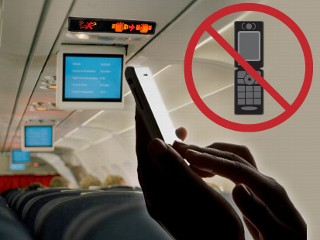
Why don't airlines allow cell phone use when aircraft door is closed?


If you really want to see a friendly flight attendant go from nice to crabby, just keep your cell phone on  and ignore them when the "Please turn off all electronic devices" public announcement is made.  This will ensure a different creature comes out, but why?

Flight Attendants have to make sure that the aircraft cabin is ready for departure. Before they can inform the Captain that it's ready, all regulations that the airline must follow per the Federal Aviation Administration need to be in place, which brings us to Portable Electronic Devices.

Per FAA Title 14, Part 91.21, and Part 121.306,"Portable Electronic Devices" "no person may operate, nor may any operator or pilot in command of an aircraft allow the operation of, any portable electronic device on any of the following U.S.-registered civil aircraft:
(1) Aircraft operated by a holder of an air carrier operating certificate or an operating certificate; or
(2) Any other aircraft while it is operated under IFR"
But the question remains, why do flight attendants get so frustrated, mad, or go 'postal' (for lack of a better word) when a passenger ignores them when asked to turn off the device? It's quite simple; If the passenger can't follow a simple rule while on the ground, then what's going to happen once they are in the air?  Can't you just turn off your device for 10-30 minutes until it's ok to turn on your device back on?

ABCnews.com did a great article back in February asking this same question. Why Can't we use Cell Phones on Planes? by KI MAE HEUSSNER. The article highlights that "contrary to what most passengers think, it's the FCC – not the FAA – that implemented the cell phone ban in the first place".  The article goes on describing "That before an airline could allow cell phone use in-flight, it would have to prove to the FAA that it wouldn't interfere with the airplane systems." But the FAA says the point is moot.

"As far as the wireless system goes, the final authority rests with the FCC," Les Dorr, an FAA spokesman told ABCNews.com. Since 1991, the FCC has banned the use of cell phones on airplanes because of potential interference with ground networks.

20/20 did an interview to see if Cell Phones are Dangerous in Flight: Myth of Fact. Whether it's proven that there is little to no interference from one cell phone, or one electronic device, why take the risk into your own hands? Even though there isn't proof that a cell phone can bring down a plane, until the FAA and the FCC say using cell phones in flight is safe, it's probably best to just keep those gadgets off.

There is also a good video back in 2006 about Phone Safety in the Sky with Scott McCartney who writes "The Middle Seat" column with the Wall Street Journal.


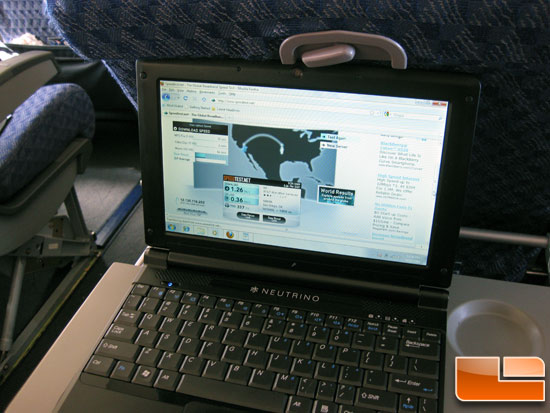
What about the use of internet on board? The Internet In-Flight is new technology that is being added to planes like wild fire. It's amazing how fast airlines are adapting to the new technology, but the planes are outfitted with a system, which includes three antennas outside the plane to receive signals transmitted by AirCell cellular towers across the country.


Legit Review.com did a great article on their website about "GoGo inflight internet speed which they tested during a flight. While traveling at speeds over 500mph, Legit reported the service was "not as good as what we see at home on our Charter Cable Plus (10 Mb/s) service, but not bad for being the first generation of Wi-Fi service in an airplane."

The biggest difference between these two is cell phones continuously search for a tower. As of right now, planes do not have any antenna's for such use, so it's great to not have to listen to that business person screaming to finalize his/her deal. This way, they can do it quietly on the internet!

It's always better to turn off your device for those few minutes. One, no matter if it's your first time flying, or your 2millionth, it's always best to stop what you are doing, and watch the flight attendants do their safety demo, (or watch the video). That safety announcement is 100x more important than that text on your phone.  Remember, it was less than 6minutes after take-off when USAirways flight 1549 had to ditch into the Hudson back in January.

Just remember to follow your flight attendants instructions though. Per FAA title 14, Part 91.11: "No person may assault, threaten, intimidate, or interfere with a crewmember in the performance of the crewmember's duties aboard an aircraft being operated" An incident report may be filed with the appropriate federal agency if you do. The Federal Aviation Act provides for fines of up to $10,000. In the case of interference with a crew member in the performance of crew duties, imprisonment for up to twenty years may be imposed in addition to the fine.