Showing posts with label Flight Attendants. Show all posts

Saturday, February 8, 2014

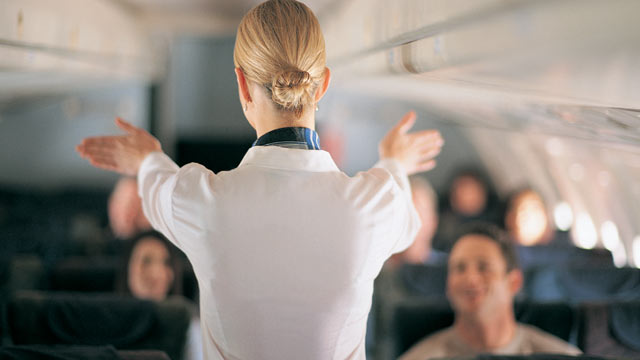
Flight Attendants in Aisle during Taxi

Why don't we see more Flight Attendants in the aisle during taxi-out/in to/from the gate?  Simply put, only safety related duties are permitted to be accomplished during aircraft surface movement. (Safety Demo, ensuring baggage is properly stowed, medical emergencies, ensuring electronics are either properly stowed-or in airplane mode, picking up any service items that were handed out during boarding)

Check out the legal version of this requirement of the FAR.

During taxi, flight attendants required by this section must remain at their duty stations with safety belts and shoulder harnesses fastened except to perform duties related to the safety of the airplane and its occupants.

What about the Galley?

While most flight attendant adhere to this requirement, unfortunately some (more often “Galley FAs”) are accomplishing duties not related to safety during taxi. This message is not about picking on the “Galleys.”  

After all, they are the miracle workers of the kitchen. Instead, the focus is to raise awareness that accomplishing non-safety duties during this period is risky. Here’s why.
Physics-101
While the aircraft is whisking along towards the departure runway, you (along with any other unsecured items) are being held in place by simple laws of gravity. Should the flight deck crew make a sudden stop, the laws of inertia quickly trump gravity -- thus placing you (and those loose items) in a precarious situation. In fact, the more distance from any fixed object (galley wall/surface), the greater the risk for severe injury.  What about those unsecured items (inserts/carts/rack of glasses)?  Applying the aircraft brakes “firmly” will result in those items very quickly on the floor -- even worse, possibly striking you!  Look at it this way….,
·        Greater Distance/Speed = Greater Inertia = Harder Impact
Don’t think it happens?  Guess again because in 2013 (for one airline) over 25 flight attendants were seriously injured due to surface movement accidentsSadly, most were avoidable had these flight attendants been seated and buckled-up.
 Let’s Talk $$
The FAA has taken a very clear position on this topic. During recent Town Halls, cabin safety inspectors have publicly stated that flight attendants can be personally fined for noncompliance with FAR 121.391. Your Cabin ASAP reports confirmed the FAA is watching since inspectors do not have to make themselves known to crewmembers when onboard.
But more importantly, you could be injured. Please don’t chance your personal safety. During taxi, all flight attendants not performing safety related duties must be in their jumpseats (focused on cabin safety) with lapbelt and shoulder harnesses fastened.
Opening wine bottles, linen lining inserts, tray unwrapping, and all the other fabulous things you do for our customers can wait.  On the other hand, your personal safety can never wait; it must always be #1.

Sunday, December 2, 2012

Flight Attendants.org chat forum Closing

For over 10yrs, I have enjoyed being, not only a member of a Flight Attendant chat forum, but also a moderator and Administrator. The site helped me make many great friends from many different airlines around the world.

Recently, the sites administrator has chosen to put the site up for sale, and because the site hasn't been extremely active in the past year, and/or bought, he has chosen to close it's doors earlier than when the sites domain name is due for renewal. (it will be closed sometime in the coming weeks)

It has been amazing to be a part of a site where I was able to watch it grow into something spectacular, helping many individuals (both young and old) come together, not only here in the United States, but world-wide, answering questions about what it's like to be a Flight Attendant, or even helping those who strive to be a Steward/Stewardess/Flight Attendant.

We have laughed, cried, fought, and bonded over many aspects of our careers. We saw some sad days on the site from losing members, or know of Flight Attendants who have lost lives either from accidents and/or incidents involving crashes or from other events.

FlightAttendants.org was a site where we could all go and share stories with one another about the crazy antics we saw during our flights, or walking through the terminals. We could all come together and complain about how the TSA treated us, or what we saw on our layovers. Of course, this could be anything from bed-bugs, dirty beds/sheets/towels/bathrooms/remotes/glasses, to having wild parties.

This was a place we could ask questions amongst each other about Federal Aviation Regulations, Airline Policies, or just complain about what our respective airlines were doing to our Unionized contracts. With these complaints, often brought with them arguments between members.

The one thing about being a flight attendant is the aspect of not being bogged down in a cubicle and not having a supervisor breathing down your neck require work to be done. Being a flight attendant requires one to be driven to work well with others, and to step up to the plate during emergency situations without thinking twice.

I will miss the great chats we had with each other, and hope sometime soon there will be another great chat forum we can once again call 'home'

Until then, keep flying the friendly skies!
Sluggo

Friday, October 19, 2012

American Airlines will be hiring

After 11 years, looks like one of the legacy carriers is finally going to be hiring for Flight Attendants.

After another type of scare tactic of up to 2,500 possible layoffs during contract negotiations, the airline was able to get over 2,200 Flight Attendants to take an early out to retirement.

With that, American just announced that come November 5th, they will be opening up their aacareers.com website and will be looking for 1,500-2,000 new hires in the next year.

Interviews would start sometime in December, with the first class starting in January, then approximately 45 new hires per class, a new class would be starting every Monday there after.

This is great news, however many are concerned that both the Union and airline mislead their members, similar to the possibility of an earlier bankruptcy in 2003, if they didn't take this early out and retire.

Whether it was a scare tactic, or a way to get the most Senior flight attendants to retire, those still flying are finally able to slightly move up the seniority ranks after a 11 year stall.

Friday, September 30, 2011

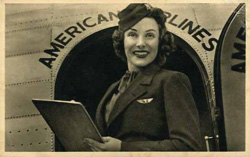
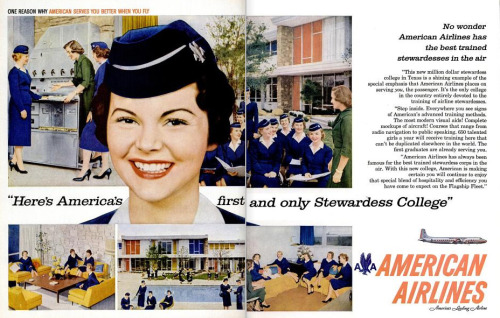
Could the standards of Pan Am survive today

After finally watching the series premiere of ABC's new hit Pan Am, it got me thinking of what the standards were like back in the 60s, if some of those same issues were still around today.  It was truly a different time-frame in the 60s, not only with the economy, but how people acted towards one another.

Put aside the fact that passengers didn't bring their 5 million bags on the aircraft (as they do today), the overhead racks were used primarily for hat boxes, coats, pillows & blankets. Fine China was actually used to serve passengers, gloves were used in flight by the Attendants, kids (and some adults) were able to actually visit the cockpit during cruise altitude.


Imperial Airways of the United Kingdom had "cabin boys" or "stewards"; in the 1920s. In the USA, Stout Airways was the first to employ stewards in 1926, working on Ford Trimotor planes between Detroit and Grand Rapids, Michigan. Western Airlines (1928) and Pan American World Airways (Pan Am) (1929) were the first US carriers to employ stewards to serve food. Ten-passenger Fokker aircraft used in the Caribbean had stewards in the era of gambling trips to Havana, Cuba from Key West, Florida. Lead flight attendants would in many instances also perform the role of purser, steward, or chief steward in modern aviation terminology.

The first female flight attendant was a 25-year-old registered nurse named Ellen Church. Hired by United Airlines in 1930,she also first envisioned nurses on aircraft. Other airlines followed suit, hiring nurses to serve as flight attendants, then called "stewardesses" or "air hostesses", on most of their flights. In the United States, the job was one of only a few in the 1930s to permit women, which led to large numbers of applicants for the few positions available. Two thousand women applied for just 43 positions offered by Transcontinental and Western Airlines in December 1935.


Female flight attendants rapidly replaced male ones, and by 1936, they had all but taken over the role. They were selected not only for their knowledge but also for their characteristics. A 1936 New York Times article described the requirements:

"The girls who qualify for hostesses must be petite; weight 100 to 118 pounds; height 5 feet to 5 feet 4 inches; age 20 to 26 years. Add to that the rigid physical examination each must undergo four times every year, and you are assured of the bloom that goes with perfect health."

Originally, female flight attendants were required to be single upon hiring, and were fired if they got married, exceeded weight regulations, or reached age 32 or 35 depending on the airline. In the 1970s the group Stewardesses for Women's Rights protested sexist advertising and company discrimination, and brought many cases to court. The age restriction was eliminated in 1970. The no-marriage rule was eliminated throughout the US airline industry by the 1980s. The last such broad categorical discrimination, the weight restrictions, were eliminated in the 1990s through litigation and negotiations. By the end of the 1970s, the term stewardess had generally been replaced by the gender-neutral alternative flight attendant. More recently the term cabin crew or cabin staff has begun to replace 'flight attendants' in some parts of the world, because of the term's recognition of their role as members of the crew.

It was an easier job then....for the most part. Passengers didn't have to worry about  getting to the airport 2-4hours prior to scheduled departure to wait through security checkpoints. However that did change and metal detectors were installed when talks of highjacking started to come around, and then of course the events after 9/11 which changed the history of aviation as it once was.


The majority of a flight attendant's duties are safety related. Prior to each flight, flight attendants attend a safety briefing with the pilots and lead flight attendant. During this briefing they go over safety and emergency checklists, the locations and amounts of emergency equipment and other features specific to that aircraft type. Boarding particulars are verified, such as special needs passengers, small children travelling as unaccompanied or VIPs. Weather conditions are discussed including anticipated turbulence. Prior to each flight a safety check is conducted to ensure all equipment such as lifevests, torches and firefighting equipment are on board, in the right quantity, and in proper condition. Any unserviceable or missing items must be reported and rectified prior to takeoff. They must monitor the cabin for any unusual smells or situations. They assist with the loading of carry-on baggage, checking for weight, size and dangerous goods. They make sure those sitting in emergency exit rows are willing and able to assist in an evacuation and move those who are not willing or able out of the row into another seat. They then must do a safety demonstration or monitor passengers as they watch a safety video. They then must "secure the cabin" ensuring tray tables are stowed, seats are in their upright positions, armrests down and carry ons stowed correctly and seat belts fastened prior to takeoff. All the service between boarding and take-off is called Pre 

Take off Service.
Once up in the air, flight attendants will usually serve drinks and/or food to passengers. When not performing customer service duties, flight attendants must periodically conduct cabin checks and listen for any unusual noises or situations. Checks must also be done on the lavatory to ensure the smoke detector hasn't been deactivated and to restock supplies as needed. Regular cockpit checks must be done to ensure the pilot's health and safety. They must also respond to call lights dealing with special requests. During turbulence, flight attendants must ensure the cabin is secure. Prior to landing all loose items, trays and rubbish must be collected and secured along with service and galley equipment. All hot liquids must be disposed of. A final cabin check must then be completed prior to landing. It is vital that flight attendants remain aware as the majority of emergencies occur during takeoff and landing. Upon landing, flight attendants must remain stationed at exits and monitor the airplane and cabin as passengers disembark the plane. They also assist any special needs passengers and small children off the airplane and escort children, while following the proper paperwork and ID process to escort them to the designated person picking them up.

Flight attendants are highly trained to deal with a wide variety of emergencies,and are trained in First Aid. More frequent situations may include a bleeding nose, illness, small injuries, intoxicated passengers, aggressive and anxiety stricken passengers. Emergency training includes rejected takeoffs, emergency landings, cardiac and in-flight medical situations, smoke in the cabin, fires, depressurization, on-board births and deaths, dangerous goods and spills in the cabin, emergency evacuations, hijackings, water landings, and sea, jungle, arctic, and desert survival skills
Sure, the climate has changed, the clientele has changed, the demand for travel has changed. I would LOVE for things to go back to the glory days from yesteryear. Seats have changed, technology has changed, and of course, in some cases, the role of the Flight Attendant has changed too.

Flight Attendants not only have to watch out for safety, but we have to keep a close eye on potential dangers to the flight itself. On top of that, service must be at an all time high, as well as simple knowledge of complicated new seats that airlines try to compete with for the business traveler.

With the weight standards, marriage restrictions, and other changes over the years, you will now find many flight attendants to be larger in size, married, and sometimes not dressed to the high standards that the airline set back in the day.
Tuesday, August 30, 2011

We know what happens to passengers during bad weather, what about flight crews?

We all know what happens to regular passengers when bad weather happens at busy airports and flights can't come or go....they get stranded. But what about the crew members....what happens to them? Do they get paid if their trip doesn't fly as scheduled? Do they get hotel rooms?

Each airline and their respective unions have their own rules regarding what happens when a flight cancels due to bad weather such as snow cancellations, hurricanes, or severe weather. Just this past week, we had Hurricane Irene make it's way through the east coast of the United States, wreaking havoc in majority of states from North Carolina all the way to Canada.

With these severe situations, we have to think about what goes on with not only the people on the ground, but the people in the air. I often laugh at people who complain about snow delays. Mostly because I ask them how did they get to the airport, did they go fast or slow....majority of the times, they say that they left earlier than they would have and drove slow, watching people slide into the median or elsewhere, so I ask them how do they expect aviation to go faster when it's snowing...same thing applies, the airport has to clear the snow, the airlines have to de-ice the planes and because of the antiquated Air Traffic Control, planes have to be separated a bit more so they don't run on top of each other in case there is a mishap.

So what about when a Hurricane happens? This past week we had Irene come through. Sure, it's upsetting when your travel plans are disrupted due to delays and/or cancellations. You can't fly to your destination to board your cruise ship, or even get the chance to get there due to everything closing.

This year, we saw something that hasn't happened ever. New York city closed down in preparation of Hurricane Irene. Sure, we were coming up to the anniversary of Hurricane Katrina, but we never saw the 'City that never Sleeps', sleep. Mayor Bloomberg chose to shut-down all ground transportation by noon on Saturday. This was the Metro Transit Authority, the PATH trains, and all air traffic into the 3 major NYC airports...LaGuardia, JFK, and Newark.

Thousands of flights were canceled and Amtrak adjusted its service to avoid the area. Airports all along the East Coast closed as the hurricane passed into each area, with thousands of national and international flights affected.

Most carriers canceled flights in advance of Irene so equipment would not be stranded, and planned post-hurricane schedules to recover as quickly as possible. Carriers like United, which uses Chicago as a hub, announced a travel waiver to let customers make changes to ticketed itineraries without incurring fees.

Airlines declined to say how many passengers were affected by the hurricane, but the numbers likely reached into the millions because so many flights, both domestic and international, make connections through major East Coast hub airports. Even passengers not flying anywhere near the East coast could be delayed for days as airlines work to get planes and crews back into position.

So what about the crew-members? As I said earlier, many have rules regarding Irregular Operations. Some crews get paid, while others do not. Some have to put themselves on a 'Make-Up' status in order to make up the lost time, while others just pay their crews even though they don't have to make-up the flying.

Here is a time-line of one Union who did an awesome job of keeping it's members informed of the path of Irene, and possible delays, cancellations, and what their members need to do in order to be paid.


Well folks, for those of us living in the NorthEast, it looks like we might have our first Hurricane since the early 1900's.
HURRICANE UPDATE

As of 5 p.m. Wednesday:

Strength: Category 3 hurricane, with sustained winds of 120 mph.

Path: Irene is moving northwest at 12 mph.

N.J. Impact: The center of the hurricane is expected to move slightly east of New Jersey around 2 p.m. Sunday.

WX Call 1447hrs EST

***THESE PLANS ARE SUBJECT TO CHANGE***
This call was strictly about the operations in PHL/JFK/BDL/LGA/EWR

***NYC will be shutting down all public transportation effective 1200 ET/27AUG.***
***A mandatory evacuations has been ordered for low levels of Manhattan.***

BDL/PHL-Will have no terminating aircraft tomorrow night, no operations on Sunday, planning on resuming with arrival flights on Monday.

EWR/LGA/JFK-Will cancel all flights arriving/departing after 1200ET 27AUG, as well as all flights on Sunday, and planning to start operating with arrivals flights on Monday. JFK’s last flight will cancel after 1000ET/27AUG.

There are concerns with crews, airport employees and TSA arriving to work via public transportation as well as our commuters.
Crew schedule is monitoring this very closely.

1416hrs EST
“The city's transit system will be coming to a halt Saturday as the city prepares for the arrival of Hurricane Irene.
Governor Andrew Cuomo says the Metropolitan Transportation Authority will institute a system-wide shut down when trains and buses begin their final runs around 12 p.m. Saturday.
It includes all subway lines, buses, Long Island Rail Road, Metro-North Railroad, and Access-A-Ride services” 

HURRICANE IRENE RECAP

WX Call 1954hrs

Information is subject to change depending on Hurricane Irene's path
LGA – last departure will be at 09:50 on the 27th.  First departure will be at 09:50 on the 28th
JFK – last departure will be at 09:55 on the 27th.  First departure will be at 09:00 on the 29th.

EWR Information
Courtesy of NY & NY Port Authority Website
concessions; Termianl A Tony Roma's and Terminal B Subway Sandwiches will be open 24hrs with 3 days food supply.
NJ Transit; will suspend train at 12 noon tomorrow. Bus service will be suspended at 6 pm.
PATH; service will be suspended at 12 noon Saturday.
Amtrak; last train schedule into rail link into NY at 1822hrs.
Airtrain to Rail link will be suspended after 1900hrs. All airtrain service will be suspended at 2300hrs.

Sometimes the airlines schedulers will try to violate the contract they have in order to maintain some sort of service...or make sure they have enough flight attendants on hand.

Last 5 Days of the Month Pay Protection

It has been brought to my attention that Scheduling is calling F/A's who are in lat 5 days of the month with cxl's and telling them they must call them back. This is not true. ARTICLE 9.P is different than ARTICLE 9.P. 6 last 5 days of the month.
Article 9.p.6 states you must put yourself on the makeup list and accept any flying that is offered. DO NOT FALL INTO CREW SCHEDS TRAP. You only need to call crew sched during a missconnect, cancellation, or illegality during the first 25 days of the month.

9am SoC Operations call regarding tri-state operations

All,
Here is a recap of this mornings SOC conference call:
HURRICANE IRENE:
CLT/RDU/RIC/BWI/IAD/DCA are all open and operating arrivals and departures.      
ORF airport only has partial electricity, some minor flooding, plans are currently to operate F682 DFW-RIC.
JFK/LGA/EWR/BOS/BDL/PHL are all closed. SOC is awaiting information to see what will be decided with public ground transportation to determine when they can successfully start operations.   
PHL airport has reported good conditions.
JFK has reported no structural damage and LGA has reported just a few manageable leaks as of 0900CT. 
JFK has several long haul arrival flights that will be decided later to determine if they will operate or possibly land in Chicago.

NY Area Airports Up and Running.....limited public transportation

Irene has finally left the area, and the NYC airports have announced plans to open in the morning:  LGA at 0700, JFK and EWR at 0600.  The LGA MOD office will open at 0600.
The M60 and Q33 buses to LGA began operations late this afternoon.  While many other modes of transportation are still suspended, please allow extra time for travel to the airport.  

 So you can see that even though passengers are stranded, so are the crew-members. It takes a lot to maintain the other side of the coin as well.
 
You have regular line flight attendants, then those flight attendants on Reserve (FAs who are sitting waiting for other FAs who call in sick or irregular operations such as bad weather) There are crews who are stuck at hotels, airports, and cities they weren't scheduled to land in. 
Now that the Hurricane has passed, the airline has to make sure they get their employee's back to where they need to be, as well as get their passengers where they've been wanting to go since the disruptions.


Tuesday, June 15, 2010

More issues with Carry-On bags...

Yes, here I am talking about carry-on bags...AGAIN. If you remember, I talked about this issue with Carry-Ons could clog Holiday Travel last year. Now that airlines are charging for checked bags, passengers are starting to bring more and more bags onto the aircraft.

The only problem is, there isn't much room for the added bags. Sure, airlines have tried to expand the overhead bins to accommodate the carry-ons, however, the airlines don't have the  money to keep up with the demand, and besides, many people don't listen to the many announcements from the flight crew requesting to place smaller bags under the seat in front of them, while reserving the over-head bins for the larger bags.

On the left is what can happen when passengers actually place their small carry-ons under the seat in front of them, while reserving the bins for their roll-aboard, AND place them wheels first into the bin. There are many bags that may be too long to fit this way, but it does help to at least try. Don't worry about your handles sticking out, when the bin is closed, the bags will roll down into the bin itself, and will fit just nicely.

Too often, I see passengers place their small purses, pocket-books, laptops, backpacks, or other small bag that can be placed under their seat, into the overhead taking up valuable room. If you have a small bag, please, just place it under the seat in front of you like this guy did on the right. I have a tote-bag that is part of my crew bag, and I always put it under the seat in front of me, not because of my computer or my In-Flight Manual being in it, but to save room for the larger bags in the bins.

After boarding is complete, and you see a bin that still has plenty of room in it, feel free to place your smaller bag into the bin, but all we ask as crew members is just be courteous to your fellow passenger and place that small bag under the seat, no matter what the duration of your flight is.

Now, don't place your bag behind your legs for take-off and/or landing. Remember, FAR 121.589 is a safety regulation that is designed to "prevent carry-on items from slowing an emergency evacuation and to prevent injury to passengers by ensuring items are properly restrained." Behind your legs is not properly restrained. Don't wrap your strap around your leg either, as this may cause you to trip during an evacuation and get trampled. Place your bag completely under the seat in front of you, making sure you have clear access to the aisle at all times.

The same is true if you are sitting at a bulkhead seat. All carry-on items must be properly stowed for taxi-out, take-off, turbulent weather, landing, and taxi-in. Some airlines will allow those sitting at bulkheads to board first to allow you to stow all of your bags, while at others the cabin crew will often try to keep the overhead bins available for you. Just remember: for take-off and landing, since there isn't a seat to stow your bags, all bags must be in an overhead bin.

Wednesday, May 19, 2010

96.8% of the 90% of AA Flight Attendants who voted, voted YES for Strike!

It was announced today that out of 18,000 flight attendants, of the 90% who voted, 96.8% voted to authorize the APFA union to call a strike if the carrier doesn't ink a labor contract with better pay and benefits, the Association of Professional Flight Attendants .

It is definitely a view of Solidarity across the board that the Flight Attendants are not happy with the current situation at the airline, especially when they have been saving the company $Millions since their 2003 concessions.

Wednesday, March 31, 2010

I'm sorry, but you have to wait for an agent...

It never fails that when I'm inside the terminal, checking the computer for my work information, in uniform, and a passenger walks up and starts requesting information about something I have no clue what they are talking about. Often it's about switching seats, or get a seat assignment because they are 'standing by' for a flight and haven't received a seat assignment.

One of the things to differentiate Pilots, Flight Attendants, and actual gate agents is agents do NOT have any sort of wings, or stripes on their uniform. These are reserved for pilots and flight attendants.

Both pilots and flight attendants will often have their roller-board bags with them, and are quickly checking the status of their schedule, or looking to see what is going on for their next flight. They don't have any ability to look at a seat map of the plane and check a passenger in, or switch seats to accommodate a family of four.

Sure, pilots may have a bit more information about a possible delay, but they usually don't know any more about seats than flight attendants do. Pilots, whether the Captain or First Officer, will have stripes on their sleeves, as well as epaulets on their shirts. Many pilots wear hats that have a lightening bolt on it (captains) or hats as shown on the left. Either way, we can't give information about Upgrades, seat-swaps, or anything like that.

The biggest customers who request info from Flight Attendants or Pilots are surprisingly the Frequent Flier. I'm always amazed because they fly so often, they know what a pilot or flight attendant uniform looks like (Wings, stripes, bags) vs. an agent who is actually stuck behind the counter being hounded by other passengers regarding their Upgrades, seat-swaps, or other questions.

I also wonder why passenger ask the TSA what gates their flights are leaving out of when there are monitors, 99.99% of the time right at the checkpoints. I've witnessed people getting mad at the TSA because their flight wasn't listed, or shows "Final Boarding", but why get upset at the TSA? They are there to screen bags, test for explosives, and make sure that potential terrorists don't make it to your plane, not know where your gate is.

Sunday, March 7, 2010

When the seatbelt sign goes on, it doesn't mean to get up and stretch

One of the things that continues to amaze me as a cabin safety professional is how the general public does not regard the safety precautions that are in place for their own safety.

Per Federal Aviation Regulation 121.317, Passenger information requirements, smoking prohibitions, and additional seat belt requirements states: A certificate holder may operate a nontransport category airplane type certificated after December 31, 1964, that is manufactured before December 20, 1997, if it is equipped with at least one placard that is legible to each person seated in the cabin that states “Fasten Seat Belt,” and if, during any movement on the surface, for each takeoff, for each landing, and at any other time considered necessary by the pilot in command, a crewmember orally instructs the passengers to fasten their seat belts.

I am continually amazed at how when the flight starts to get turbulent, and the crew members are having difficulty walking about the cabin performing their duties, and the captain will turn on the seatbelt sign, it never fails that at least 3-5 people will get up and stretch. They do this as if "HAHA, look at me, I can defy the seatbelt sign". 

Well, here are some reports to show that one should NOT get up out of their seat while the seatbelt sign is on. (well, it is common sense isn't it?)

People were flying around 
Three people were injured due to turbulence 
Seven slightly injured after Qantas plane plummets due to turbulence 
26 passengers injured by turbulence on Continental plane 
 Flight Attendants and passengers injured due to turbulence on Air Canada 

Even when the sign is not on, you should always keep your seatbelt on because you never know when that "Clear Air Turbulence" is going to hit. It may be an extremely smooth flight, you forget that you are flying in a metal tin can and BOOM, you drop 500-1000ft in seconds without any notice.  

Whenever I travel, I keep my seatbelt on just like I do while driving or riding in a car. You never know when another idiot is going to sideswipe you and you could be in a serious accident. Yet, people don't care for not only their own safety, but the safety of those around them. 

Please use common sense and just remain in your seat. Remember that if you do get up and the cabin crew are strapped in their seats, it's probably a good idea to immediately take your seat. They are required to inform you that "Per the FAA, the seatbelt sign is illuminated". Don't just ignore them and do your own thing, it is not just for your safety, but to those around you as well.
 

Tuesday, December 8, 2009

Alcohol in the Sky


Now that the holidays are here, many people will be flying home for the holidays. Along with the thousands of people in the airport, mechanical delays, and weather delays, most travelers will make it a point to stop by an airport restaurant and/or bar and have a drink or two.

This is great to have a beverage during a lengthy delay, but do remember that Federal Air Regulations 121.575, and 91.17 state that  "No certificate holder may allow any person to board any of its aircraft if that person appears to be intoxicated", as well as, "no pilot of a civil aircraft may allow a person who appears to be intoxicated or who demonstrates by manner or physical indications that the individual is under the influence of drugs (except a medical patient under proper care) to be carried in that aircraft.


Alright, well those regulations are for restricting drunk passengers get onto the airplane, but what about while on the plane?  Believe it or not, the same FARs hold true, and when a passenger gets out of hand in-flight, they could be met by law enforcement upon arrival...something you don't want to have happen!  

So whose to blame if you get intoxicated while in-flight? Well, it actually comes down to the consumer.  Flight Attendants aren't bar tenders, and with all the other Safety Related things they need to worry about while working, a drunk passenger shouldn't be one of them.  


One thing people need to know about alcohol and flying, is it affects your body differently in the plane, than it does while on the ground. The cabin altitude is generally set between 5,000 and 7,000 feet-meaning that there’s less oxygen to breathe. While your blood alcohol level remains the same as it would be at sea level, it feels as if you’ve drunk a lot more. Never mind that the cabin humidity is often less than 10 percent, and that alcohol dehydrates you.

Over the years, there have been many issues where you may have heard about intoxicated passengers:

DUI in the SkyDrunk passenger gets jail time, has to reimburse AA $7,757, Court to decide whether Delta can be sued for alcohol sales to name a few.

I'm not saying that you shouldn't drink...by all means, DRINK, just drink moderately. Do remember that the altitude will affect your body differently than you would be at sea level, so be careful. Just because you normally drink 5 beverages at the bar, doesn't mean you can actually handle 5 beverages in the air. A plane is not a bar. If someone drinks too much at their favorite tavern, they can push that person out the door and call him a cab. Try doing that at 30,000 feet.

If your drink gets low, don't ever say “Hey, stewardess!”  The term “stewardess” and “steward” are widely considered to be archaic, if not derogatory. They are especially offensive if they’re used while, at the same time, you repeatedly press the flight attendant “call” button over your seat. Flight attendants are not airborne waiters. They are bona fide crew members who have undergone many hours of safety training. Yeah, they serve drinks but if the plane goes down, they can also save your butt.

To quote a selection from Christopher Elliott's page which highlight some idea's about alcohol on flights.


1. Alcohol heightens a stressful experience.
Unless you haven’t flown in a few years, you probably know that air travel is getting more stressful. Alcohol can make it worse, say experts. “Drinking on planes has unique hazards, particularly as flying becomes more stressful,” says Karen Sternheimer, a sociologist who teaches at the University of Southern California. “If there is a long delay on the tarmac the irritation can be magnified by alcohol.” At a bare minimum, passengers need to be sober enough to understand and cooperate with crew instructions. “Under increasingly stressful conditions, too much alcohol can make a simple annoyance into a serious problem,” she adds.
2. There’s nowhere to run.
Anywhere else, you can walk away from an unruly drunk. But not on a plane. “It’s a metal tube and blasting off at hundreds of miles per hour,” says Jeffrey Lord, a veteran frequent flier based in Burlington, Vt. (Lord believes alcohol isn’t the only problem on a plane. “How about spending hours strapped in with these stressed-out companions with nothing other than caffeinated beverages being served?” he asks. Good point.)

3. Drinks on a plane aren’t just intoxicating — they’re toxic.
“Higher altitudes do amplify the affect of alcohol, which, as you can imagine, can cause problems for passengers that imbibe too much,” says Ashley Halsey, a spokeswoman for American Behavioral, a healthcare organization that specializes in drug and alcohol abuse and treatment for employers. “Because alcohol impairs judgment, the likelihood of violent or other anti-social behavior is increased. When people fly, they also get dehydrated, and alcoholics tend to drink alcohol instead of water, which tends to increase their adverse reaction.”
4. It’s annoying.
Just listen to Terry Ward’s account of her last flight from Orlando to Newark. “I sat next to a group of guys who were on their way to Montreal for a boys’ weekend,” she remembers. “They started drinking right after we took off and didn’t stop. Hard liquor the whole flight.
I thought the flight attendants would stop serving them but they didn’t, because one of the guys was tipping them $20 each round.” Instead of cutting off the passengers, she made all of their drinks doubles, as they requested. “It was completely obnoxious,” she adds.
5. It’s embarrassing, too.
Who doesn’t have a story to tell about having one too many on a plane? Here’s Denise Vardakas’. She and her mother were flying from San Diego to Grand Cayman, and on their final leg they enjoyed “endless Jack and Diet Cokes.” She adds, “We were having a great time chatting with the crew members, and a few of our fellow passengers.” On their way back a week later, the same crewmembers greeted them as the “Jack and Diet” ladies. Oh, my.
6. You could relapse.
If you’re off the booze, a plane trip is a relapse waiting to happen, say experts. “I’m still constantly surprised by how many of my patients will relapse or overdrink on planes,” says Carrie Wilkens, the co-founder and clinical director of the Center for Motivation & Change, a private group practice in New York that specializes in treating addiction and compulsive behaviors.
“It’s gotten to the point where I’ve heard it as a therapist so regularly that now, when any one of my clients is planning a trip, I tell them, ‘OK, we have to make up a plan for how you’re going to manage this flight.’” Her patients inevitably agree that they drink more in the air, and take precautions to avoid it.
7. How are you getting home?

Even if you survive your flight without incident, there remains the issue of getting back home. If you’re planning to drive, you might keep the case of Dana Papst in mind. A few years ago, after disembarking from a US Airways flight on which he was served alcohol, he crashed his car, killing himself and five others. The FAA later cleared the airline of any wrongdoing.
I don’t consider myself a modern-day prohibitionist, but I think these practical reasons for keeping the skies alcohol-free make sense.
Why not wait until you’re home to crack open a bottle? It could make your next flight a better one — if not save your life.
As on the ground, if you must drink in-flight, please drink responsibly and know when you are starting to get tipsy. Don't leave it up to the Flight Crew to put a stop to your enjoyment. Be sure to drink plenty of water, more than you normally would while at a regular bar on the ground.  

Thursday, November 19, 2009

Why don't airlines allow cell phone use when aircraft door is closed?


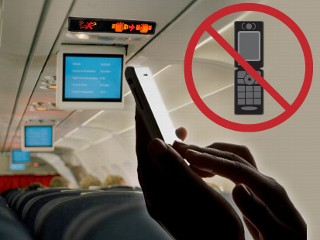
If you really want to see a friendly flight attendant go from nice to crabby, just keep your cell phone on  and ignore them when the "Please turn off all electronic devices" public announcement is made.  This will ensure a different creature comes out, but why?

Flight Attendants have to make sure that the aircraft cabin is ready for departure. Before they can inform the Captain that it's ready, all regulations that the airline must follow per the Federal Aviation Administration need to be in place, which brings us to Portable Electronic Devices.

Per FAA Title 14, Part 91.21, and Part 121.306,"Portable Electronic Devices" "no person may operate, nor may any operator or pilot in command of an aircraft allow the operation of, any portable electronic device on any of the following U.S.-registered civil aircraft:
(1) Aircraft operated by a holder of an air carrier operating certificate or an operating certificate; or
(2) Any other aircraft while it is operated under IFR"
But the question remains, why do flight attendants get so frustrated, mad, or go 'postal' (for lack of a better word) when a passenger ignores them when asked to turn off the device? It's quite simple; If the passenger can't follow a simple rule while on the ground, then what's going to happen once they are in the air?  Can't you just turn off your device for 10-30 minutes until it's ok to turn on your device back on?

ABCnews.com did a great article back in February asking this same question. Why Can't we use Cell Phones on Planes? by KI MAE HEUSSNER. The article highlights that "contrary to what most passengers think, it's the FCC – not the FAA – that implemented the cell phone ban in the first place".  The article goes on describing "That before an airline could allow cell phone use in-flight, it would have to prove to the FAA that it wouldn't interfere with the airplane systems." But the FAA says the point is moot.

"As far as the wireless system goes, the final authority rests with the FCC," Les Dorr, an FAA spokesman told ABCNews.com. Since 1991, the FCC has banned the use of cell phones on airplanes because of potential interference with ground networks.

20/20 did an interview to see if Cell Phones are Dangerous in Flight: Myth of Fact. Whether it's proven that there is little to no interference from one cell phone, or one electronic device, why take the risk into your own hands? Even though there isn't proof that a cell phone can bring down a plane, until the FAA and the FCC say using cell phones in flight is safe, it's probably best to just keep those gadgets off.

There is also a good video back in 2006 about Phone Safety in the Sky with Scott McCartney who writes "The Middle Seat" column with the Wall Street Journal.


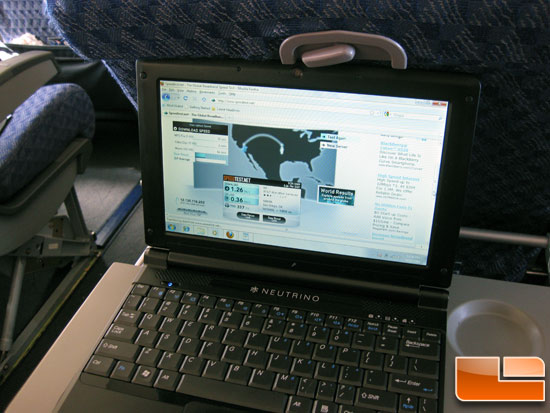
What about the use of internet on board? The Internet In-Flight is new technology that is being added to planes like wild fire. It's amazing how fast airlines are adapting to the new technology, but the planes are outfitted with a system, which includes three antennas outside the plane to receive signals transmitted by AirCell cellular towers across the country.


Legit Review.com did a great article on their website about "GoGo inflight internet speed which they tested during a flight. While traveling at speeds over 500mph, Legit reported the service was "not as good as what we see at home on our Charter Cable Plus (10 Mb/s) service, but not bad for being the first generation of Wi-Fi service in an airplane."

The biggest difference between these two is cell phones continuously search for a tower. As of right now, planes do not have any antenna's for such use, so it's great to not have to listen to that business person screaming to finalize his/her deal. This way, they can do it quietly on the internet!

It's always better to turn off your device for those few minutes. One, no matter if it's your first time flying, or your 2millionth, it's always best to stop what you are doing, and watch the flight attendants do their safety demo, (or watch the video). That safety announcement is 100x more important than that text on your phone.  Remember, it was less than 6minutes after take-off when USAirways flight 1549 had to ditch into the Hudson back in January.

Just remember to follow your flight attendants instructions though. Per FAA title 14, Part 91.11: "No person may assault, threaten, intimidate, or interfere with a crewmember in the performance of the crewmember's duties aboard an aircraft being operated" An incident report may be filed with the appropriate federal agency if you do. The Federal Aviation Act provides for fines of up to $10,000. In the case of interference with a crew member in the performance of crew duties, imprisonment for up to twenty years may be imposed in addition to the fine. 

Saturday, November 14, 2009

"Excuse me, will you lift my bag for me"

This is a question that Flight Attendants often get when passengers board the airplane. The only problem is, flight attendants don't know how heavy your bag is because we didn't pack it. There have been many times that I would see an elderly woman with a bag and would offer to put it into the overhead bin. The only problem is the few times I offered to help, it's heavier than expected, and heavier than my own carry-on bag.


Now, the majority of flight attendants will be more than glad to assist you with your bag. Just don't expect them to actually lift it for you. I was in the back of an airplane one time and this woman asked me to assist her, so I was glad to offer my assistance. The only problem is that once we were lifting it, she completely let go and I almost dropped the bag on the passenger below. It took all my might to not drop it, and luckily it didn't fall. The only problem, I had a very sore shoulder the rest of the day because of it.

The best rule to remember is if You packed it, then You lift it. There have been too many flight attendants injured and have had to undergo surgery on their shoulders to replace their rotator cuff. If a flight attendant tears their rotator cuff due to lifting a passengers bag, they may not be covered from their insurance. This isn't good. This means that they may have to take time off from work, using their sick time and this will often be looked down upon from the airline. 


A torn rotator cuff is not something that many airlines will cover with insurance, hence why many crew members will not actually lift your bag. Many will be more than happy help you find a spot for your bag, but please don't expect any of them to actually lift it because a torn rotator cuff hurts. Thankfully, I haven't had to undergo this surgery yet, but I'm sure at some time/point, I might.

Of course, a torn cuff isn't due solely on helping with passengers bags, there are many things that could lead to a torn rotator cuff, but actually lifting a bag that flight attendants don't know the weight of, could lead to a torn cuff.


I know it may be difficult to actually find a space for your roll-aboard, especially now that winter is on it's way. Many people will throw their coats, jackets, and everything in-between into the bin not thinking that there may be someone else needing to put their bag into the bin too.

Luckily, many airlines have now expanded the overhead bins to allow bags to be fit length-wise, wheels first (or out) which doing this will allow for extra bags to be placed into the bins. Unfortunately, there are still those passengers who think that the bin is solely theirs, but please remember that the bins are shared space and you have to share with others. Just like back when you were growing up, it's good to share with others!


I know that everyone brings on different size bags, but as you can see in the photo on the left, bags can fit neatly into the bin. Sure, you will have some of those new bags that can be pushed in every-which direction, often times their wheels will not allow the bag to be placed length-wise. Even some of the new garment bags are too big to be placed into the bins and take up more than they actually should.


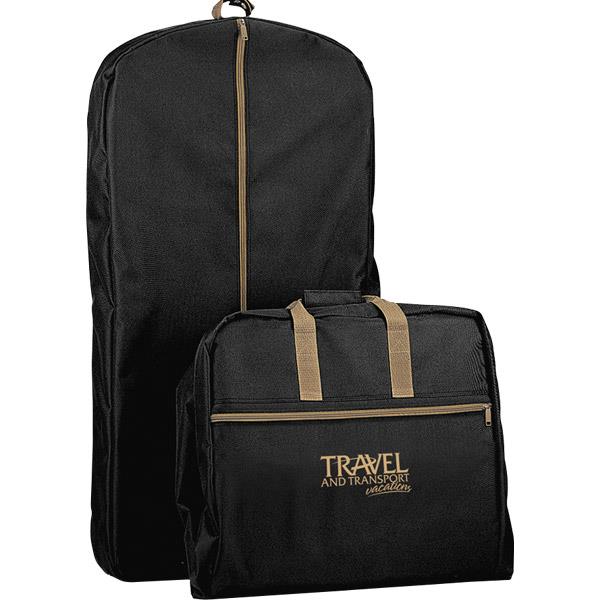
Speaking of garment bags, it would be nice if you brought your hook with your bag and placed it into the closet that most planes have. This will help those passengers with the roll-aboards find places for their bags and fit them length-wise into the bins.

If you plan on hanging your garment bag into the closet, please be sure to have it open and ready to hang when you get to the aircraft boarding door. This will ensure that you don't block everyone behind you to continue boarding. The great thing about putting your bag into the closet, you could just put your laptop and/or purse under the seat in front of you and leave the over head bins for those large carry-on bags!

Well, I hope that this spread a little  light for everyone. There are some airlines that allow their flight attendants to help lift passenger bags, but don't be upset if flight attendants deny actually lifting it for you. Best thing if you ask for assistance, lift the bag as high as you can (usually above your shoulders) and the flight attendants will assist you the rest of the way.

Friday, November 13, 2009

Carry-ons could clog holiday travel...Ya think?!?!


 I'm glad that Jim Kavanagh of CNN posted this on the CNN website, it will give travelers a 'heads-up' on what to expect on the plane. However, it's not going to alleviate the problem.

I find that many travelers will find their seat, put all bags into the bin, put their coat/jacket into the bin, then close it, not thinking about anyone else. Their thought "My stuff is stowed, I don't have to worry now".  Well, this is wrong.  Do think about everyone else because if you would just put your small bag under the seat (where your feet go) then that could create an extra space for another bag!

I will see the most frequent business traveler with only a laptop stop traffic, put his laptop in the bin, take off his coat, and place it next to his laptop and sit down, not thinking that the space he just took, could be for a large roll-aboard bag.  It's this mentality "But I followed the rules" is what really creates havoc during boarding, especially when it's time to close the aircraft door when we still have 15 people trying to find room for their carry-ons.

Rule of thumb? Small bag under the seat in front of you (where your feet go) large bag in the over head bin. Most airlines have expanded bin space, so try and place them wheels first (or wheels out and up on NWA) and hold onto your coat/jacket until everyone has found a place for their bags.

If you are seated in row 31 and you pass an open bin at row 5, do NOT put your bag there because now the person seated in that area won't have a place for their bag! Besides, would you want your carry-on so far away from you that you can't keep an eye on it?  You would be surprised at how often people walk off planes with someone else's bag. I even saw someone take my crew bag out of the bin and start rummaging through it in flight!  I asked them if I could help them, they said "no". I then informed them that they were looking in MY bag and then they got all mad and huffy at ME!  ME! because I caught them rummaging through my bag!

Here are some tips from CNNs website to consider when traveling this winter:
• Obey the government's and airline's rules on size and number of items; use the sizer at the gate.
• Don't attempt to bring prohibited items such as sharp objects or bottles of liquids.
• Stow your bag with the wheels in first.
• Don't put bags in lengthwise.
• Put your larger item up top, smaller item at your feet.
• Use the bin directly over your head. Using a bin up front when you're sitting farther back is cheating.
• Don't commandeer another passenger's under-seat space.
• Make sure your bag is light enough to lift over your head yourself .
• Remove from your bag beforehand any items you may need during the flight rather than sifting through it in the overhead bin.
• Wait until everyone's bags are stowed, then lay your coat on top.

Following these simple and easy guidelines will ensure that you will have a happy boarding. If your airline has 'group' boarding, then only go up to the line when your group is called, don't be gate lice and hover around blocking the passage to those who are called first.  Believe it or not, group boarding is done from the back of the airplane to the front.  (those people who are already in various seats when you board are Elites who just had to have their bags in the bins first and sit down)

Thursday, November 12, 2009

Wow, has it truly been over 2wks since my last blog?

Sorry ladies and gentlemen, I have taken a little vacation without knowing it and got a little more involved with that darn Twitter account. I tell you, it's a full time job keeping up with all the airline folk out there twit-twit-twittering away about my love of aviation.

There have been lots of interesting news this past week:
British Airways and Iberia agreeing on a combined company 

London arrests a UAL Pilot for being drunk before a flight to Chicago.  
Iberia's Flight Attendants striking for better wages.
Delta Airlines engine fire in Atlanta grounded flight.
Flight Attendants get same FMLA as 9-5 jobs.
Couple jailed after stealing bags at PHX Sky Harbor Airport
US Airways Flight Attendants to picket  PHX airport for better wages
AA Flight Attendants to hold "Mock Strike" at select AA hub airports

I think the one that gets my vote for the worst is:
Woman drives into Aquarium at TPA


Just a crazy week around the world of aviation if you ask me. I think I'll have to start taking my camera with me again and take pictures of my endeavors and start posting about them. However, that just might not be a good idea, I'm often too critical of my passengers, especially when they don't act the way I would expect them to.

Another thing I'll have to start doing is writing down when either one of my fellow flight attendants act up, or when a passenger does something funny or weird so I can blog about it and let you know.  I know at some point I'll have to post a picture of a Business Class seat that was literally trashed by a Business Class passenger.  I truly amazes me how people leave their area messier than when they found it, yet are the same ones who complain that the airplanes are filthy. Alas, I'll have to leave that for another night.

Monday, October 26, 2009

New uniforms for cabin crews

Flight attendants at Air Tahiti Nui donned new uniforms recently. The updated outfits, created by Balenciaga Uniforms, were commissioned to celebrate the airline's 10th anniversary. (but was it a mixup?  According to this website, it may not be his.)

The new uniform pieces for women cabin crew include several dresses, as well as jackets, pants and skirts. The men have new jackets and trousers, as well as several choices of shirts.

While some of the uniform items have a crisp, tailored look, other pieces feature fabric printed with Tahitian flowers, for a more casual appearance. Colors selected for the uniform pieces represent the colors of the ocean, the island lagoons, and the flowers of Tahiti.

Air Tahiti Nui's pilots, agents, and ground crews also have new uniforms. Here is a link to the Air Tahiti Nui Photo Gallery where you can see more pictures of the crew attire.

American Airlines is in the process of updating their 20yr old cabin crew uniforms, but no images are available.  It's a true shame that American can't just pick a designer and use their uniforms and make a firm date when flight attendants must start wearing them.

As of right now, if you order the pants, you might get them by December, then sometime next year you can order the shirts.  Following that it will be Coats, and possibly vests and dresses.  When asked, the VFSolutions people couldn't answer when all the pieces will be available to wear.  I'm sure there are some people out there like to order everything all at once.

When I was in the Air Force, we were always told to keep one complete uniform together and dressed up for promotional purposes.  This means that one piece isn't a different color from another piece because you wear it at different times, or launder it at different times.

I can't believe that it's already been over three years since Delta Airlines unveiled their Richard Tyler uniforms.  Even among the latest complaints from Northwest Airlines Flight Attendants who might be size 18 or bigger, Richard Tyler has every right to not put his name on something he doesn't approve.  Yet, the uniform looks very good because it's a clean cut look. 

I just wish that crews from (mostly US Carriers) cared about their own personal appearance because when a uniform is worn properly, it looks very good.  Some just refuse to do it because they are 'protesting' to either the company for taking away uniform points, or protesting against the their Union for not fighting stronger for their rights.

All-n-all, I hope that we get new uniforms (all pieces together) very soon

NW pilots likely to be terminated

According to a statement from Delta, looks like the pilots of NWA Flt 188 will be terminated.

Using laptops or engaging in activity unrelated to the pilots' command of the aircraft during flight is strictly against the airline's flight deck policies and violations of that policy will result in termination. 

 As another news source suggested, the pilots became aware of their situation after a flight attendant called up to ask when they would be starting their descent into the MSP airport.